

Running two stock counts feels like an admin problem. Something to tidy up when things quiet down.
It is not. It is a revenue problem, and the retail industry now has a price tag for it.
Most small retailers in the US arrive here the same way. You started with a shop and added a website, or started online and opened a counter. Either way you now have two systems that disagree about what you own, and every week you spend real hours making them agree.
Plenty of guides will tell you to sync online and offline inventory. Very few tell you what the gap actually costs, and almost none mention the two consequences that catch US retailers hardest, sales tax and in-store pickup. That is what this post covers.
TLDR
- Inventory distortion costs retail $1.7 trillion a year worldwide, and the measure counts stock your system confirms but nobody can locate. That is the two-counts problem by definition.
- The gap takes money four ways. Refunds on oversold orders, sales you decline after padding your counts, markdowns on stock you lost sight of, and hours spent reconciling two systems.
- US in-store and online sales are taxed on different logic, so two systems means two tax treatments, broken nexus tracking, and manual reconciliation every filing period.
- In-store pickup promises a specific unit on a specific shelf right now. Two stock counts cannot support that promise.
- Synced means one stock pool, updated on every sale, writing in both directions, with one order record. Most setups that claim to sync manage two of those four.
- None of this needs enterprise software. It needs one stock pool and one order list, in that order.
What Two Stock Counts Cost the Industry
There is a name for the gap between what your system thinks you have and what is on the shelf. Analysts call it inventory distortion, and it gets measured every year.
The numbers. IHL Group’s 2026 Inventory Distortion Study puts the worldwide cost of out-of-stocks and overstocks at $1.7 trillion a year, equal to 6.2 percent of global retail sales. North America alone accounts for around $415 billion of it. Out-of-stocks make up roughly $1.2 trillion of the total and overstocks the remaining $572 billion.
Those are industry-wide figures, and no small retailer should read them as their own loss. What matters is the definition underneath them, because it is more specific than people expect.
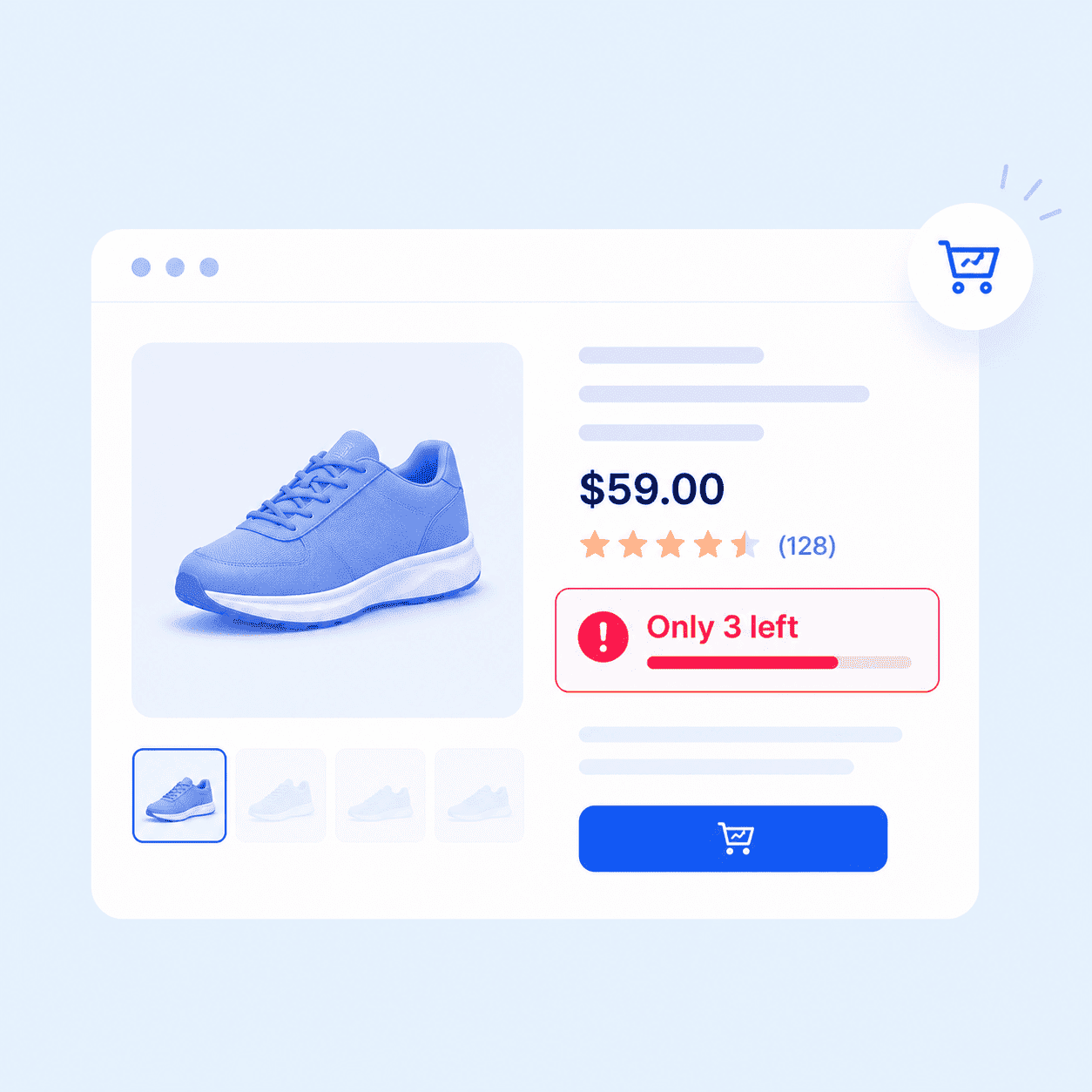
IHL counts an out-of-stock as any moment a customer arrives ready to buy and leaves without the item, for any reason other than price. That includes empty shelves. It also explicitly includes stock the system confirms you have but nobody can locate.
Read that again, because it is the whole argument. A meaningful share of the biggest loss category in retail is not a supply chain failure. It is a records failure. The item exists, or the item does not exist, and the system says the opposite. That is exactly what two disagreeing stock counts produce, every day, on purpose.
The returns side adds to it. The National Retail Federation put US merchandise returns at $849.9 billion in 2025, or 15.8 percent of annual retail sales. Not all of that traces to inventory errors, but every oversold order that ends in a refund lands somewhere in that pile, and each one costs you the payment fee, the handling, and the customer.
The Four Ways the Gap Takes Your Money
Industry totals are useful for scale. Here is how the same problem shows up in a store doing a few hundred orders a month.
1. You Sell What You No Longer Have
This is the obvious one. A counter sale empties the shelf, the website keeps taking orders, and you refund a customer who was happy to pay you. You lose the margin, the payment processing fee, your time, and a first-time buyer who now has a reason to shop elsewhere.
2. You Hide Stock You Actually Have
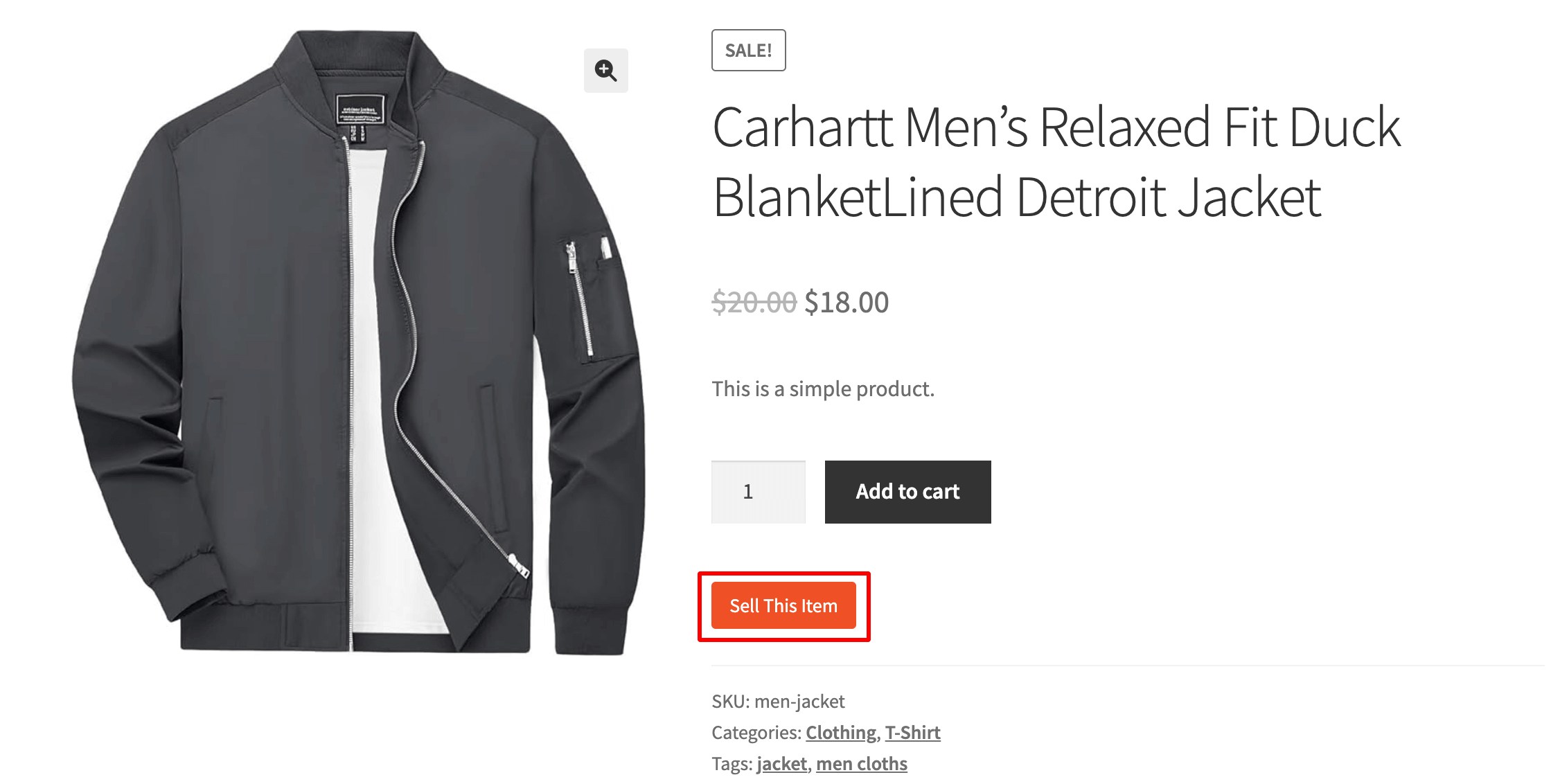
This one is quieter and often bigger. Once you have been burned by overselling, you pad. You mark the last two units unavailable online, or you keep a buffer you never sell, because you no longer trust the number. Every unit you hide is a sale you declined while holding the goods.
Nothing in your reports records it, which is why most owners never notice how much it costs.
3. You Discount Stock You Forgot You Owned
Inventory nobody can see does not move. It sits in a back room until it goes out of season, and then it goes out at a markdown.
IHL counts overstock as the moment a customer meets a discount over 25 percent, which is a useful way to think about it. Deep discounts are usually not a pricing strategy. They are the bill for having lost track of something.
4. You Pay Someone to Reconcile it by Hand
Somebody keys counter sales into the website, or updates the shelf count from yesterday’s orders, and that somebody is usually the owner at nine at night. One US retailer working with the integration tool Webgility reported saving 15 hours a week after connecting their store and their POS, along with about $1,400 a month of manual work.
Price your own hour honestly and run the same sum. For most small retailers this line alone justifies the fix, before a single oversell is prevented. If the category is new to you, our guide on what a WooCommerce POS system is explains how the pieces fit together.
Why Sales Tax Gets Harder With Two Systems
This is the section missing from every guide on this topic, and it is the one that catches US retailers at filing time.
Your two channels are not taxed the same way, and that is not a quirk. It is the law working as intended.
The Counter is Simple
A sale in your shop uses origin logic. The customer takes possession at your location, so you charge the combined rate for that address, which is the state rate plus any county, city, or district tax. One rate, every time, all year.
Online is a Moving Target
Most states use destination sourcing for shipped orders, meaning you charge the combined rate at the customer’s address. States can contain hundreds of tax jurisdictions, so the correct rate changes from one order to the next. California runs a hybrid, sourcing state, county, and city tax to the seller while sourcing district tax to the buyer.

Then there is nexus. Since South Dakota v. Wayfair in 2018, states can require you to collect tax based on sales volume alone, with no physical presence. The common baseline is $100,000 in sales or 200 transactions into a state per year, but plenty of states set the dollar figure at $250,000 or $500,000, several have dropped the transaction count entirely, and the measurement period differs too.
Worth knowing. Selling through Amazon, Etsy, or eBay usually does not add to this, because marketplace facilitator laws make the platform collect and remit on those orders. Your own website is a different matter. There, the obligation is yours.
Where the Two Systems Bite
Now put those two treatments in separate systems that never talk.
- Nexus tracking breaks. Thresholds are measured on sales into a state. If your channels report separately and you only watch one, you can cross a threshold without knowing, and states have grown steadily more willing to pursue it.
- Reconciliation becomes manual. Two order lists means adding up two sets of taxable sales by hand for every filing period, then hoping nothing was counted twice or missed.
- An audit has no single trail. If a state asks you to substantiate a return, one system with every order in it answers the question. Two systems and a spreadsheet is a much longer conversation.
When a counter sale becomes an order in the same system as your website sales, your taxable sales are one number by definition. That is not a tax feature. It is a side effect of having one record, and it is worth more at filing time than most owners expect.
None of this is tax advice, and rules move. Confirm your own position with an accountant or your state’s Department of Revenue.
Buy Online, Pick Up In Store Needs One Stock Pool
US shoppers now treat in-store pickup as normal rather than a perk, and it is one of the clearest examples of what omnichannel retail means in practice. It is also the feature small retailers most often try to launch and most often get wrong, because it depends entirely on the thing this post is about.

Think about what a pickup promise actually claims. Not that you can order it, and not that it will arrive. It claims this specific unit is on that specific shelf right now, and it will still be there when you walk in. Nothing else in retail makes a promise that precise.
Two stock counts cannot support it. The website only knows a number from the last sync, and between one sync and the next a walk-in customer can buy the unit you just promised somebody else.
Three things have to be true before you switch it on.
- The count is live, not scheduled. A pickup promise made against an overnight figure is a guess dressed up as a guarantee.
- The unit comes out of the pool immediately. A reserved item has to stop being available to the counter the moment it is claimed, or you have promised the same unit twice.
- Your physical count is genuinely accurate. A synced system still reports the wrong number if the shelf itself is wrong. Count fast-moving lines often.
Do not rush this one. A failed pickup is worse than offering no pickup at all. The customer changed their plans, drove to you, and left with nothing. That is a stronger negative experience than a slightly slower delivery would ever have been.
What Synced Actually Has to Mean
The word gets used loosely, so here is the standard worth holding vendors to. Four conditions, and most setups that claim to sync only meet two.
| Condition | What it rules out |
|---|---|
| One stock pool, not two mirrored counts | Two numbers copied at intervals, which drift between copies |
| Updates on every sale, not on a schedule | Overnight or hourly syncs, which let you oversell all day |
| Writes in both directions | A POS that reads website stock but never reports counter sales back |
| One order record for both channels | Separate order lists, which break reporting and tax reconciliation |
The fourth condition is the one people skip. Unified stock with split order lists solves the overselling problem and leaves you reconciling two sets of numbers for every report and every filing.
How to Sync Online and Offline Inventory Without Enterprise Software
The tools that used to be enterprise-only are no longer priced that way, which is why this is worth doing now rather than at some future size.
The shortest path for a store already on WooCommerce is a point of sale that runs inside it rather than beside it. wePOS takes that approach, so a counter sale becomes a WooCommerce order like any other and draws from the same stock as the website. There is no integration to maintain between two products, because there are not two products.
If you run a marketplace, the same logic covers your vendors. Each one sells in person and online from a single stock pool, and their counter sales land in the same order list as their website sales.
Wherever you land, do it in this order. Get one stock pool working first. Bring both channels’ orders into one list second. Everything else, including pickup and unified customer records, depends on those two being right.
FAQ(s)
1. How often should online and offline inventory sync?
On every sale, not on a timer. Any interval is a window in which you can sell stock you no longer have, and a nightly sync means that window is the whole trading day. The practical test is whether a counter sale changes your website count before the next customer loads the page.
2. Is a spreadsheet enough for a small store?
Only if your order volume is genuinely tiny and you never sell the same item in both places on the same day. The moment two channels move the same unit, a manual record is behind reality and you are relying on remembering to update it during your busiest hours.
3. Do I charge the same sales tax on in-store and online orders?
Usually not. In-store sales generally use the rate at your location, while shipped orders in most states use the rate at the customer’s address. Selling across state lines can also create economic nexus and an obligation to collect somewhere you have never been. Check your specific position with an accountant.
4. What stock accuracy do I need before offering in-store pickup?
High enough that you are confident promising a specific unit to a specific person. Most guidance puts that above 95 percent on the lines you would offer for pickup. Below that, a failed pickup does more damage than not offering the option.
5. Does syncing inventory help with returns?
It helps with the ones caused by overselling, which are the returns you can actually eliminate. It also makes cross-channel returns workable, since a purchase made at the counter is findable when the customer comes back through your website, and the other way around.
6. Does this work if I run a multivendor marketplace?
Yes, and the logic is the same one layer down. Each vendor needs a single stock pool covering their own online and in-person sales, so a market stall sale reduces their website count and your commission is calculated on both. Our guide on how to run a multivendor POS with Dokan and wePOS covers that setup.
7. Will I need to recount everything to get started?
You need one accurate count at the start, because the system inherits whatever you give it. That count is the least enjoyable part of the job and the part that determines whether any of it works. Do it properly once rather than twice.
One Count Is Worth More Than Two
Two stock counts do not cost you one thing. They cost you the sales you refund, the sales you decline because you stopped trusting your own numbers, the stock you discount because you lost sight of it, and the hours you spend making two systems agree.
None of those appear as a line item, which is why the problem survives so long in so many stores. The industry figures put a scale on it, and the sales tax and pickup consequences show how far past the shelf it reaches.
The fix is not a big system. To sync online and offline inventory you need one stock pool and one order list, and if your store runs on WooCommerce that is a shorter journey than most owners assume. Our step-by-step guide to integrating online and offline sales from one dashboard takes it from here.
Subscribe to
Dokan blog
We send weekly newsletters, no spam for sure!



Leave a Reply