

Every business wants to make sales, but the path from attracting a visitor to converting them into a customer is not always clear.
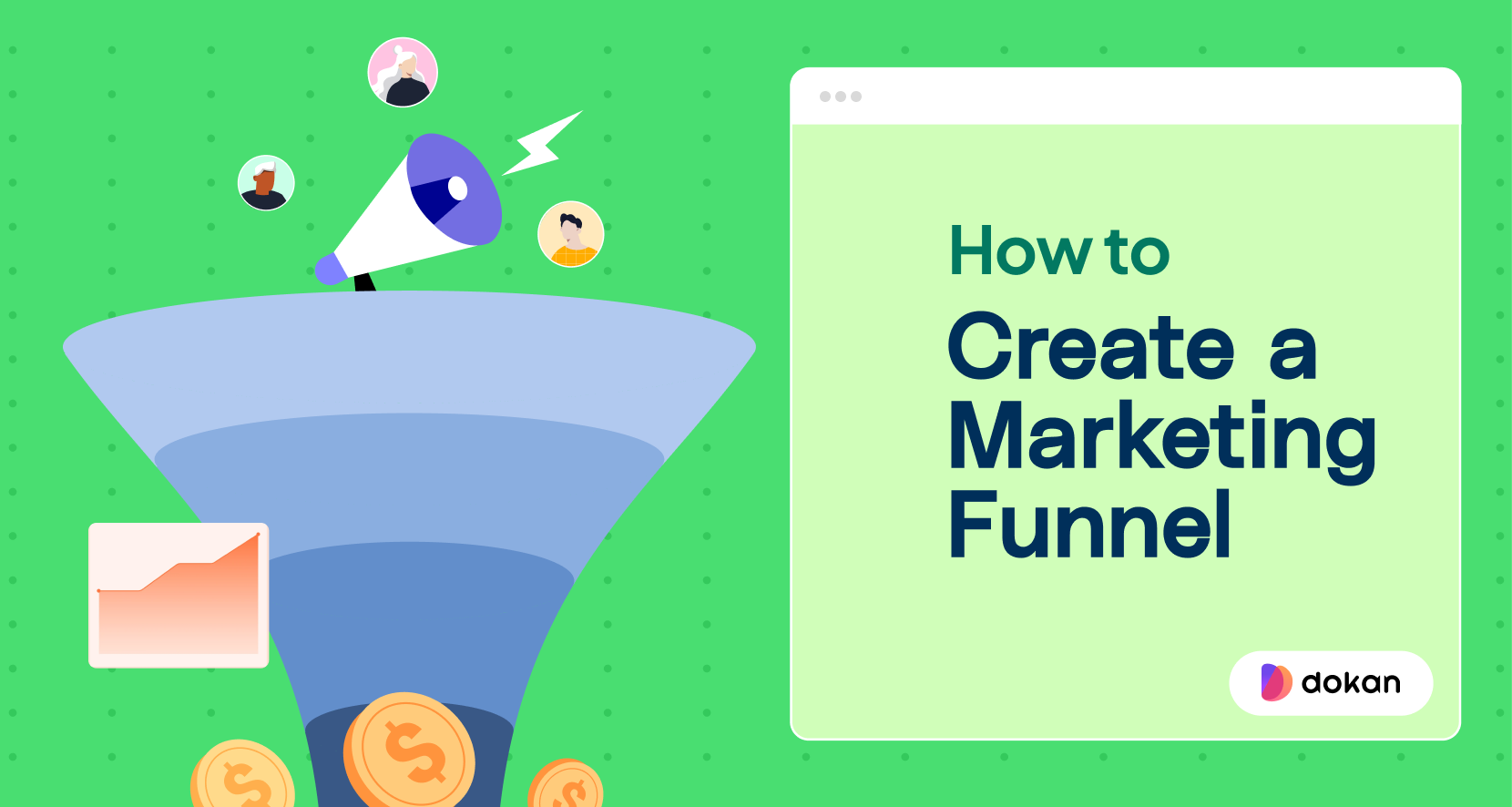
That’s where a marketing funnel comes in. A marketing funnel is a roadmap that shows how people move from discovering your brand to making a purchase.
A well-designed funnel helps you create the right type of content at the right time. It also allows you to track how leads behave, which helps improve your marketing over time.
In this blog, we will explain everything you need to know about creating a marketing funnel that generates sales. So, let’s get started!
What Is a Marketing Funnel?
A marketing funnel is a framework that describes the journey a potential customer takes from first hearing about your business to becoming a paying customer.
The term “funnel” is used because the number of people decreases at each stage. Many visitors enter at the top, but only a few make it to the bottom as customers.
Marketing Funnels vs. Sales Funnels – Are They the Same?
People often confuse marketing funnels and sales funnels. They are related but not the same.
- Marketing Funnel: Focuses on attracting, engaging, and nurturing leads. Content marketing, social media, and email campaigns are common tools.
- Sales Funnel: Focuses on closing leads and generating revenue. Sales calls, product demos, and proposals are more common in this stage.
Think of it this way: the marketing funnel brings leads into your business, and the sales funnel turns them into customers. Both work together to create a seamless experience.
Marketing Funnel Examples
Marketing funnels can look different depending on the business model. Here are a few examples:
- eCommerce Store: Top of funnel (ToFu) content could be blog posts or social media posts about trends in your niche. Middle of funnel (MoFu) could include product comparison guides. Bottom of funnel (BoFu) could include product pages, discounts, or free trials.
- SaaS Business: ToFu could be educational webinars. MoFu could be case studies or email nurturing sequences. BoFu could be free trials or one-on-one consultations.
- B2B Company: ToFu could be LinkedIn posts or guides. MoFu could be whitepapers or demos. BoFu could include personalized proposals or live meetings.
Stages of a Marketing Funnel

There are different ways to break down the funnel. We will look at three common models.
Basic Three-Stage Funnel (ToFu/MoFu/BoFu)
This is a very popular model. It divides the funnel into three parts.
- ToFu – Top of the Funnel: This is the awareness stage. People here are discovering they have a problem. They are looking for information. They might not know your brand exists. Your goal here is to attract them and provide help.
- MoFu – Middle of the Funnel: This is the consideration stage. People now understand their problem. They are looking at different solutions. They are evaluating options. Your goal is to show you are a good choice and build trust.
- BoFu – Bottom of the Funnel: This is the decision stage. People are ready to buy. They are choosing between you and a competitor. Your goal is to make it easy and appealing for them to choose you.
Detailed Five-Stage Funnel
This model breaks the journey into more steps.
- Awareness: The person becomes aware of a problem or need.
- Consideration: They consider different ways to solve that problem.
- Conversion: They decide to make a purchase from you.
- Loyalty: They use your product and have a good experience.
- Advocacy: They are so happy they tell others about you.
AIDA: The Four-Stage Content Creation Funnel
This is a classic marketing model. It is great for planning content.
- Attention: Get your audience’s attention. (ToFu)
- Interest: Build their interest in your solution. (MoFu)
- Desire: Make them desire your specific product. (BoFu)
- Action: Get them to take action and buy. (BoFu)
For this guide, we will use the AIDA model. It fits well with creating content.
How to Build a Marketing Funnel for Your Content
Now, let’s build your funnel. We will go through each stage. We will cover the goal, keywords, channels, and content for each one.
Stage 1: Problem/Need Recognition (ToFu – Attention)
This is the very top of your funnel. People here have a problem. They might feel some frustration. But they might not know the exact cause or the solution. They are just starting to look.
Your Goal: Your goal is not to sell. It is to help. Provide free, valuable information that makes them aware of their problem. You want them to see you as a helpful resource.
Keyword Strategy for ToFu: Think about the questions your audience asks. Use broad, problem-focused keywords.
Examples: “how to get more website traffic”, “why is my sink dripping”, “best exercises for back pain”.
Best Channels for ToFu:
- Google Search: People search for their problems here.
- YouTube: They look for tutorial and explainer videos.
- Social Media (Pinterest, Instagram, TikTok): They discover ideas and inspiration.
- Facebook Groups: They ask others for advice.
Examples of Content for ToFu:
- Blog posts that answer common questions.
- Infographics that explain a complex topic simply.
- Short, educational videos on social media.
- Podcast episodes about industry trends.
- Checklists or simple guides.
Stage 2: Information Search (MoFu – Interest)
People in this stage know their problem. Now they are researching solutions. They are learning about different approaches. They are not yet looking at specific products. They are looking at methods.
Your Goal: Show the different ways to solve the problem. Introduce your solution as one of the options. Continue to provide value and build trust.
Keyword Strategy for MoFu: Keywords become more solution-focused. They are more specific.
Examples: “content marketing strategies”, “fix a leaky faucet”, “yoga for back pain”.
Best Channels for MoFu:
- Email Newsletter: You can nurture people who signed up from your ToFu content.
- Webinars: A great way to dive deep into a solution.
- YouTube Deep Dives: Longer, more detailed videos.
- LinkedIn Articles: Good for B2B audiences.
Examples of Content for MoFu:
- Comparison articles (“Method A vs. Method B”).
- In-depth guides and eBooks.
- Webinars or live Q&A sessions.
- Case studies that show how others solved the problem.
Stage 3: Evaluation of Alternatives (MoFu – Desire)
Now people know the possible solutions. They are comparing specific products or services. They are reading reviews. They are looking at prices. They are trying to decide which one is best for them.
Your Goal: Make a strong case for why your product is the best choice. Show how it is different and better. Use social proof like reviews and case studies.
Keyword Strategy for MoFu: Keywords are now very specific and include product types and comparisons.
Examples: “best email marketing software”, “Moen vs. Delta faucet reviews”, “Hyperice vs. Theragun”.
Best Channels for MoFu:
- Email Marketing: Send targeted emails based on what content they have seen.
- Retargeting Ads: Show ads to people who visited your website but did not buy.
- Your Blog: Publish detailed product reviews and comparisons.
Examples of Content for MoFu:
- Detailed product comparison pages.
- Customer testimonials and case studies.
- Product demo videos.
- Free trials or samples.
Stage 4: Purchase Decision (BoFu – Action)
This is the moment of truth. The person has decided to buy. They are ready to take out their wallet. They might be on your product page. Or they have a free trial that is about to end.
Your Goal: Remove any final doubts. Make the buying process very simple. Offer a little push if needed, like a limited-time offer.
Keyword Strategy for BoFu:
These are commercial intent keywords. The person is ready to buy.
Examples: “[Your Brand Name] coupon”, “[Your Brand Name] pricing”, “buy [product name] online”.
Best Channels for BoFu:
- Your Website: Your product and checkout pages must be perfect.
- Email: Abandoned cart email sequences.
- Sales Calls/Chat: For high-ticket items, direct contact is key.
Examples of Content for BoFu:
- A clear and simple checkout page.
- A pricing page that is easy to understand.
- An email with a special discount code.
- A final demo call to answer last-minute questions.
Check – eCommerce Marketplace Trends for 2026
Which Marketing Funnel Metrics Should I Track for Each Stage?

You cannot improve what you do not measure. Track these metrics for each stage to see how your funnel is performing.
- ToFu Metrics:
- Website Traffic: How many new people are you attracting?
- Page Views: How many pages are they looking at?
- Social Media Reach: How many people are seeing your posts?
- Video Views: How many people are watching your videos?
- MoFu Metrics:
- Email Subscribe Rate: What percentage of visitors sign up for your list?
- Lead Magnet Downloads: How many people download your eBook or guide?
- Webinar Attendance Rate: How many people who sign up actually attend?
- Time on Site: Are people engaging with your content?
- BoFu Metrics:
- Conversion Rate: The most important one. What percentage of visitors buy?
- Click-Through Rate (CTR): On emails and ads leading to a sale.
- Cost per Acquisition (CPA): How much does it cost to get one customer?
- Shopping Cart Abandonment Rate: How many people add to cart but don’t buy?
Also check – eCommerce Content Marketing Strategy: A Beginner’s Guide to Success
Create Marketing Funnels That Convert
Trust us when we say, building a marketing funnel takes work.
But it is worth it. Instead of hoping for random sales, you create a reliable system. You guide people on a journey. You help them at each step.
Remember, the key is to provide value. Always think about how you can help your audience. Answer their questions. Solve their problems. Build trust. Then, when you ask for the sale, it will feel natural to them.
Start small, then map out one customer journey. Create one piece of content for each stage. See how it works.
Then you can build from there. Your future sales will thank you for it.
Subscribe to
Dokan blog
We send weekly newsletters, no spam for sure!





Leave a Reply