



Halloween 2026 lands on a Saturday, and that one fact changes how your marketplace should plan October. Shoppers get a full weekend for parties, which pushes costume and decor spending up, but it also shortens the window for anything that has to arrive in the post. Below you will find 30 Halloween marketing ideas built for multi-vendor stores, plus a dated campaign calendar so you know what to launch and when. Take what fits your sellers and skip the rest.
TLDR
Why Halloween 2026 Is Worth Planning Around
Halloween marketing is any seasonal promotion, slogan, product drop or event a business runs between early October and November 1 to capture holiday demand. It is now a genuine retail season, not a novelty weekend. The National Retail Federation surveyed 8,045 consumers in September 2025 and found spending heading for a record high, with 73 percent of people planning to take part.
Halloween spending reached a record $13.1 billion in 2025, or $114.45 per shopper, according to the National Retail Federation’s annual consumer survey.
Two numbers from that survey matter more than the headline. Online search is the top source of costume inspiration at 37 percent, ahead of retail stores at 27 percent. And 31 percent of shoppers buy their Halloween items online, level with specialty costume shops. So the research happens on a search engine, and roughly a third of the money follows it online.
If your multi-vendor marketplace sits out October, that search traffic goes to someone else. Three things make seasonal campaigns work better than a normal promotion.
- Urgency. The season has a hard end date, so people buy fast instead of saving items for later.
- Emotion. Nostalgia and fun drive impulse buys, and Halloween is a cheap way for households to feel festive.
- Community. People post costumes and decorations without being asked, which hands you free reach.
Your Halloween 2026 Campaign Calendar
Work backwards from Saturday, October 31. Here is the week by week plan, with the real 2026 dates.
| Dates | Focus | What to ship |
|---|---|---|
| Sep 21 to Oct 4 | Prep | Recruit seasonal vendors, build banner templates, write the email sequence |
| Oct 5 to Oct 11 | Launch | Halloween skin goes live, landing page published, teaser email sent |
| Oct 12 to Oct 18 | Content peak | UGC contest opens, bundles listed, countdown series starts |
| Oct 19 to Oct 25 | Conversion push | Scale ads, promote the gift finder, tease the flash sale |
| Oct 26 to Oct 31 | Last call | Shipping cutoff Tue Oct 27, Witching Hour sale Fri Oct 30, gift cards only on Sat Oct 31 |
| Nov 1 to Nov 3 | Handoff | Clearance on leftover stock, thank you email, tease Black Friday |
That October 27 cutoff is the line most stores miss. A Saturday Halloween means the last two shopping days are a weekend, so standard ground shipping ordered on the Thursday will not make it. Tell your vendors now, and put the date on the storefront.

30 Halloween Marketing Ideas for Online Stores
These are split three ways. On-site ideas change what shoppers see when they land. Social campaigns bring new people in. Retention plays keep them after October 31. Most cost nothing but time.
A. Storefront and In-Store Experience Ideas
Good physical shops use decoration to build excitement before anyone picks anything up. Your site has to do the same job in about three seconds. These ten ideas change what a shopper sees the moment they arrive.
1. Give the Whole Marketplace a Halloween Skin
Change the look of the site and every vendor store in the same week, so the marketplace feels like one event rather than a few sellers doing their own thing. Switch your accent colors to orange, black and purple, add a themed hero banner, and update your social profile images on the same day.
Tip: Build one Canva banner template, share the edit link with your vendors, and give them a Friday deadline. Consistency is what makes it read as a campaign.
2. Build a Spooky Product Gallery
Group products from different vendors into themed collections on your homepage, such as Witch’s Corner, Monster Must-Haves or Trick-or-Treat Essentials. Mixing sellers in one collection gives newer vendors visibility they would never get alone, and it lifts sales across the marketplace.
3. Hide Mystery Discounts Across Vendor Stores
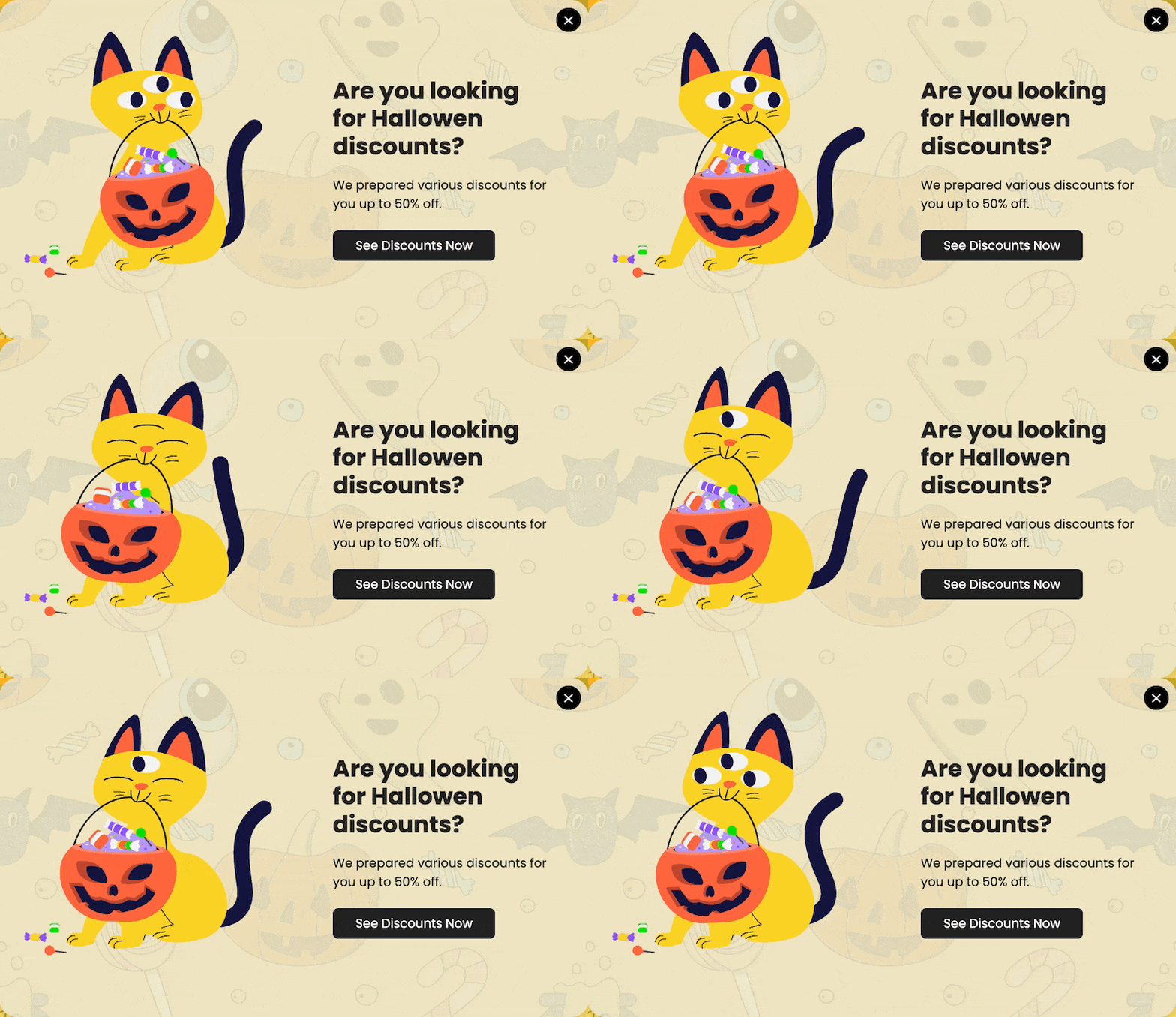
Turn browsing into a game. Hide secret discount codes on different vendor pages and let shoppers hunt for them. At checkout, a Trick or Treat card reveals what they actually won, anywhere from 10 to 20 percent off.
Bonus: Offer a grand prize to anyone who finds every code. It keeps people moving between stores instead of bouncing after one page.
4. Launch a Halloween Gift Finder
Most shoppers do not know what they want, they know who they are buying for and roughly what they will spend. Build simple filtered pages such as Under $25, For Pets, For Office Parties and Last Minute, then link them from the homepage. These pages also rank on their own, which the rest of your Halloween content will not.
5. Create an Evergreen Halloween Landing Page
Use one permanent URL for Halloween every year rather than a fresh page each October. The page collects links and authority season after season, so by year three it ranks early instead of climbing from scratch. Refresh the products and the dates, keep the address.
Tip: Point it somewhere neutral like /halloween, never /halloween-2026.
6. Post a Shipping Cutoff Countdown
Put your order deadline where nobody can miss it. A sitewide bar reading “Order by Tuesday, October 27 to get it before Halloween” does two jobs at once, it creates urgency and it stops the support tickets you would otherwise get on November 1. Ask each vendor to confirm their own cutoff with their carrier, since a seller shipping from overseas needs an earlier date.
7. Run a Witching Hour Flash Sale
Open a one hour sale at midnight and let multiple vendors join with their own coupons. Friday, October 30 works best in 2026, because people are already up and the goods can still be collected or downloaded the next day.
Pro Tip: Tease it for 48 hours with a countdown, then send one email at 11pm. Something like “Something wicked, and discounted, arrives at midnight.”
8. Sell Limited-Time Halloween Bundles
Get vendors who sell complementary items to build a bundle together, such as a Witch’s Brew Kit of mugs, candles and loose tea from three different sellers. Bundles raise average order value and put each vendor in front of the others’ customers.
9. Release Limited-Edition Halloween Products
Short runs sell faster than permanent stock because the decision cannot be postponed. Ask vendors for seasonal one-offs, themed jewelry, scented candles, prints or snacks, and group them under a heading like “Here for a Frightfully Short Time.”
10. Add Free Halloween Goodies to Every Order
Small extras cost very little and get photographed. Candy, stickers, or a digital download such as a phone wallpaper or a printable decoration all work. Ask vendors to add one thing to every October order and to mention it on the product page.
B. Social Media and Content Campaigns
You do not need a big budget to make noise in October. Running a marketplace gives you something a single store never has, which is a roster of sellers who will all promote the same campaign at once. These ten ideas turn that into reach.
11. Run One Big Halloween UGC Contest
Pick one contest and put everything behind it, rather than three small ones that each get twelve entries. Ask shoppers to post a photo of themselves, their pet, their pumpkin or their decorated room using products bought from your vendors, tagged with a single hashtag. Winners get store credit that works across every seller.
Read more, 7 top examples of successful user-generated content campaigns.
12. Publish DIY Halloween How-To Guides
Show people how to use what your vendors sell instead of just listing it. Short, practical pieces do best, along the lines of “How to Decorate a Room for Under $20”, “3-Minute Halloween Snacks” or “5 Costumes You Can Build From Marketplace Finds.” Link every product mentioned straight to the vendor page.
13. Post a Countdown to Halloween Series
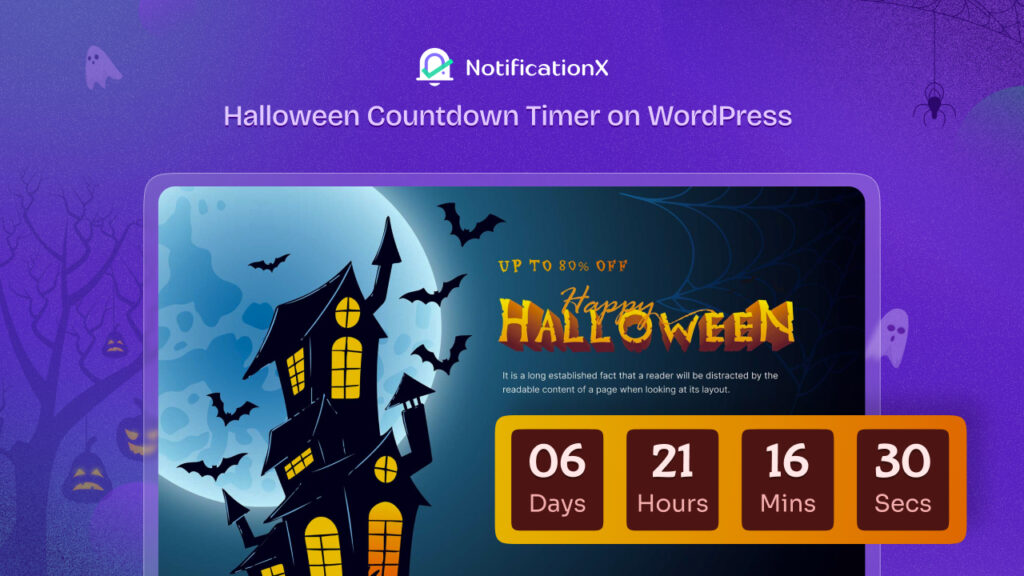
Run a daily series for the last two weeks of October. Each day features one vendor product, one small discount, or one useful tip. Starting Monday, October 19 gives you 13 days, which fits the “13 Days of Halloween” framing neatly.
Pro Tip: Schedule the whole series in advance. A countdown that skips two days reads worse than no countdown at all.
14. Send Halloween Email Campaigns
Email is where most of your Halloween revenue will come from, so the subject line does the heavy lifting. Steal the structure from these Halloween email subject line examples and keep the body short, one offer, one button.
15. Recover Abandoned Carts With Halloween Urgency
Seasonal shopping produces more abandoned carts than normal because people compare across several stores before committing. Rewrite your recovery emails for October and put the shipping deadline in the subject line, since that is the one piece of information that actually changes the decision. Tools like weMail or MailPoet handle the sequence.
Timing: One email at one hour, a second at 24 hours, and a final one on October 26 for anyone still sitting on a cart.
16. Host a Virtual Halloween Workshop
Put a vendor on camera teaching something people actually want to learn, such as pumpkin carving, monster makeup or styling a party outfit. Stream it on Instagram, Facebook or YouTube, and drop product links in the comments while it runs. One good session gives you clips for the next two weeks.
17. Film Funny or Spooky Reels
Short video still gets the cheapest reach of anything on social. Three formats work reliably, the unboxing that arrives just in time, the product that comes alive overnight, and the vendor demonstrating something in costume. Ask each seller for one clip and you have a month of posts.
18. Run Interactive Polls and Quizzes
Polls cost nothing and they warm up an audience before you ask for money. Try “Vampires or werewolves this year?” or “Which Halloween treat are you?”, then link the result to a matching vendor collection. Story polls on Instagram take about two minutes to build.
19. Launch Halloween Ad Campaigns
Give your paid campaigns a seasonal creative refresh rather than a new strategy. Themed visuals and headlines such as “Shop before the spirits do” lift click-through on the same audiences you already target. Here is how to run Google Ads if you have not set them up before.
Advanced move: Retarget last October’s buyers with a “Trick or treat, we miss you” ad. They already converted on a Halloween offer once.
20. Partner With Niche Influencers
Small accounts in the right niche beat big accounts in the wrong one. Match influencers to what your vendors actually sell, whether that is beauty, handmade goods, home decor or pet gear, and ask for a “Shop my spooky picks” post rather than a straight advert. Micro creators will often trade for product.
C. Promotions, Retention and Community
A Halloween buyer who never comes back is an expensive customer. These ten ideas are about the weeks after October 31, turning one seasonal order into a habit.
21. Sell Limited-Edition Halloween Gift Cards
Gift cards are the only thing you can still sell on October 30 and 31, which makes them the perfect close to the campaign. Design a seasonal version with bats or pumpkins, keep it on sale until midnight on the 31st, and let each vendor issue their own.
Pro Tip: A line like “Nobody ever returned a Halloween treat” does more work than a discount here.
22. Run a Buy One, Get the Ghost Offer
Rename your standard BOGO and it stops looking like a standard BOGO. Vendors can run versions that suit their stock, such as “Buy one candle, summon another free” or “Buy a costume, get a mini treat.” Attach a minimum spend so it lifts order value instead of cutting into it.
23. Reward Halloween Reviews
October orders are your best chance of the year to build up review counts, because people are pleased with what they bought and it arrived for an occasion. Enter every review left during October into a draw for a gift box or store credit, and feature the best ones in your November newsletter.
24. Give Loyalty Members a Bonus Week
Repeat buyers should get something the general list does not. Double points, a mystery reward, or early access to the limited-edition products all work, and they cost less than acquiring a new customer. Run it the week of October 26 so it overlaps with your heaviest traffic.
25. Run a Guess-the-Candy Giveaway
Post a photo of a jar of candy and ask people to guess the count. It takes five minutes to set up, it gets more comments than almost anything else you will post, and the prize can be a small voucher that works across any vendor store.
26. Recruit Seasonal Vendors Before October
Every idea in this list works better with more sellers, so run a short recruitment push in late September. Handmade sellers, costume makers and small bakers all want a storefront for six weeks without building their own site, and a waived commission for the first month usually closes it. Some of them stay through Black Friday.
27. Pitch Your Vendors Into Halloween Gift Guides
Bloggers and local publications build Halloween gift guides in the first half of October, and most of them are looking for products to feature. Send three or four of your best vendor items with photos and prices, early, before their guide is full. One placement usually outperforms a week of paid social.
28. Run a Reverse Trick-or-Treat Charity Drive
Give a small share of October sales to a local cause and tell people exactly which one. Vendors can opt in individually, and the campaign gives your marketplace something to say that is not a discount. Publish the total afterwards, because an unreported pledge reads as marketing.
29. Show Off Your Team and Vendor Costumes
Put faces on the marketplace. Photos of your team and your sellers in costume get more engagement than product shots, and they remind shoppers there are real people behind the storefronts. A “who wore it best” poll extends the same content for another day.
30. Send a Spooky Direct Mailer
Print still cuts through for a small, loyal list. Send your top 100 customers a pumpkin-shaped postcard with a QR code to a hidden discount, posted in the first week of October so it arrives while people are still planning. It works best for local marketplaces where the sender feels close by.
Smart move. Do not vanish on November 1. Pull your campaign data, which emails opened, which vendors sold, which products moved, and use it to plan Black Friday on November 27. Your audience is already warm.
Halloween Sale Slogans and Taglines You Can Copy
A good Halloween slogan does one of three things: it creates a deadline, it names the discount, or it makes someone smile enough to click. Most Halloween discount ideas fail on the wording rather than the offer, so the 52 lines below are written to be pasted straight into a banner or a subject line. They are grouped by where you would actually use them.
Halloween Sale and Discount Slogans
Use these on banners, category headers and paid ad creative, where the job is to name the offer fast.
Urgency and Flash Sale Slogans
These carry a deadline inside the line itself, which is what makes them work for a one hour sale or a shipping cutoff.
Halloween Taglines for Your Homepage
A tagline sits above the offer and sells the store rather than the discount. Keep it under eight words so it survives on mobile.
Halloween Email Subject Lines
Subject lines follow different rules to banners. Lowercase reads more personal in an inbox, and curiosity beats cleverness.
Halloween Coupon Code Ideas
A memorable code gets shared in group chats, which a random string never does. Keep them short enough to type from memory.
Halloween Slogans for Business Branding
These work for a seasonal brand or a store that leans into Halloween all year rather than for a single campaign.
Short Halloween Marketing Phrases for Social
Caption openers and story stickers, where you have about four words before someone scrolls past.
Halloween Retail Activations That Drive Footfall
Plenty of marketplace vendors also sell somewhere physical, at a market stall, a studio, or a small shop. A Halloween retail promotion that gets people through a door on Halloween weekend also feeds the online store, because the people who turn up are the ones who follow, subscribe and reorder in November. Six retail activations that need almost no budget.
- Run a weekend pop-up with your top vendors. Book one space for Saturday October 31 and put five sellers in it. Shared rent, shared audience, and every vendor promotes it to their own list.
- Offer local pickup with a treat at collection. Pickup removes the shipping deadline entirely, which is the single biggest constraint on a Saturday Halloween. Hand over a sweet with the parcel and people photograph it.
- Join a high street trick-or-treat trail. Most town centres run one. Getting on the map costs nothing and puts your name in front of every family walking the route.
- Put a QR code in the window. Link it to your Halloween collection so the people who walk past after closing still land on the store. Track it as a separate source so you know whether the window earned its keep.
- Build a photo backdrop. A decorated corner with your name in shot turns every visitor into a post. This is the cheapest reach in the whole list.
- Open late on Friday October 30. The night before a Saturday Halloween is when people realise what they forgot. Late opening catches the panic buyers that everyone else misses.
Count footfall properly or none of this tells you anything. A clicker at the door and a note of the daily total is enough to compare October 31 against a normal Saturday, and that number is what decides whether you do it again next year.
Which Halloween Ideas to Run First
Sort by how long each one needs before it pays off. Anything in the two week column is already too late if you are reading this in the last week of October.
| Idea | Lead time | Effort | Best for |
|---|---|---|---|
| Shipping cutoff bar | 1 day | Low | Every store, no exceptions |
| Halloween email sequence | 2 days | Low | Stores with a list over 500 |
| Witching Hour flash sale | 3 days | Low | Marketplaces with active vendors |
| Gift cards | 3 days | Low | Last minute and digital-only buyers |
| Marketplace Halloween skin | 1 week | Medium | Anyone with vendor buy-in |
| Gift finder pages | 1 week | Medium | Catalogs over 200 products |
| UGC contest | 2 weeks | Medium | Stores with an engaged social following |
| Seasonal vendor recruitment | 3 weeks | High | Marketplaces under 50 sellers |
| Evergreen landing page | 1 season | High | Anyone planning to do this again |
How Dokan Helps You Run These Campaigns

Ideas are the easy part. The hard part is getting forty vendors to run them without you doing forty setups by hand. Dokan puts the controls in the vendor dashboard, so sellers launch their own campaigns and you keep the overview.
Vendor Coupons and Discounts
Vendors create their own themed coupons without touching your settings. They can set a percentage or a fixed amount, apply it storewide or to single products, and schedule a start and end time, which is what makes the midnight flash sale possible at all.
Storefront Customization
Each vendor gets a store page they control, including the banner, the logo and the product layout. That is what makes the marketplace-wide Halloween skin realistic, since you publish a design guide and the sellers apply it themselves.
Product Management for Bundles
Listing seasonal stock takes minutes rather than a developer ticket. Vendors can group products into themed bundles like a Witch’s Brew Kit, and you can pull the best ones onto the homepage with the Featured Products module.
Vendor Dashboard for Campaign Control

Sellers track orders, coupons and performance in real time from the Dokan dashboard, which removes most of the back and forth that usually lands on you during a campaign. Tell vendors to check it daily from October 19, not once at the end.
Email and Social Integrations
Dokan works with the WooCommerce tools you already use, including MailPoet, weMail and WP Social Ninja, so the email sequence and the social scheduling need no extra setup. An “October best sellers” email featuring your top vendors is a five minute job once the data is in front of you.
Analytics for the Post-Campaign Review
Once the campaign closes, Dokan’s built-in reports show which sellers, coupons and traffic sources actually produced revenue. That is the record you plan Black Friday from, and it is the reason to run the review in the first week of November while the numbers still mean something.

Turn Halloween Traffic Into Year-Round Customers
The point of October is not October. A seasonal spike that leaves nothing behind costs you the same effort as one that builds a list. Four things convert the traffic into something lasting.
- Follow up within three days. Send a thank you on November 2 with a preview of what is coming, while the purchase is still fresh.
- Reward the vendors who showed up. Feature the top three in a spotlight post. Sellers who get promoted take part again next year without being chased.
- Keep the assets. Your contest entries, photos and clips all work again at Christmas with different colors. Here is a guide to repurposing content properly.
- Move the list, not the offer. Everyone who entered a contest or claimed a code is now a subscriber. Nurture them through November rather than starting cold on Black Friday.
Frequently Asked Questions
What makes a good Halloween sale slogan?
A deadline or a number, carried in under eight words. “Scary good savings” is decoration, while “Gone by midnight” gives someone a reason to act now. Test the line by removing the Halloween pun, and if nothing useful is left, the slogan is not doing any work.
Is Halloween marketing worth it if my vendors do not sell costumes or decor?
Yes, because the season is about occasion buying, not product category. Food, candles, jewelry, pet supplies and stationery all sell on a Halloween framing, and the National Retail Federation’s 2025 survey found candy and decorations together account for a larger share of spending than costumes. If nothing in your catalog fits at all, run the gift card and loyalty ideas and skip the themed collections.
How deep should the discount be?
Shallower than Black Friday, or you train people to wait. Ten to fifteen percent is enough for a seasonal offer, and mystery or tiered discounts work better than a flat number because they create a reason to open the email. Save the heavy cuts for November 27.
Will a Halloween campaign cannibalize my Black Friday sales?
Rarely, because the two occasions pull different purchases. Halloween buying is small, fast and occasion-driven, while Black Friday is planned and higher value. The risk is discount fatigue rather than lost revenue, so keep the October offers modest and clearly seasonal.
What if most of my vendors will not take part?
Run the campaign with whoever says yes and publish the results. Sellers join seasonal campaigns after they watch someone else get featured on the homepage, so the first year is about proof rather than participation. Give the sellers who do take part the banner slots and the email features.
Is it too late to start in mid-October?
No, but drop the slow ideas. From October 15 onwards, skip the landing page, the vendor recruitment and the direct mailer, and put everything into email, the flash sale, the shipping deadline and gift cards. Those four convert without needing lead time.
Do I need a separate Halloween theme for my WordPress site?
No, and switching themes in October is a genuinely bad idea. Change your accent colors, swap the hero banner, and add a seasonal notice bar instead. A theme change this close to your heaviest traffic of the quarter risks breaking checkout for the sake of decoration.
Pick Three Halloween Marketing Ideas and Start This Week
Thirty ideas is a menu, not a to-do list. Choose one on-site change, one social campaign and one retention offer, then get them live before October 5 so they have time to work. Start using Dokan for free today and let your vendors run their own Halloween campaigns.



Leave a Reply