

Free shipping is one of the strongest triggers in online shopping. Most customers notice it before they notice the product price. Many even add extra items to qualify for it. But does free shipping actually increase sales for your store?
The short answer is yes, but there’s more behind it.
Free shipping removes hesitation. It reduces the surprise costs that often stop customers at checkout. It also creates a feeling of getting a better deal, even when the product price stays the same. This small change in your offer can improve conversions, reduce cart abandonment, and increase repeat purchases.
In this blog, we’ll look at why free shipping works, how it affects customer behavior, and when it makes sense to use it for your store.
Why Offer Free Shipping?
Free shipping removes a big reason for cart abandonment. Many shoppers leave the checkout when they see extra shipping fees. Studies show that unexpected costs cause around 48% of cart abandonments. That means almost half of lost sales come from surprise shipping charges.
Free shipping also improves conversion. Stores that added free shipping often see higher order numbers. In some cases, orders increased by up to 50% after removing shipping fees. This happens because shoppers feel the total price is fair and clear.
Free shipping also builds trust. When customers see simple pricing with no hidden fees, they feel more comfortable buying. It reduces hesitation and helps new customers complete their first order.
Free shipping can also increase repeat purchases. When customers know they do not need to pay extra fees, they come back more often.
This is why many online stores offer free shipping. It removes friction, builds trust, and helps turn more visitors into paying customers.
Types of Free Shipping
There is no single way to offer free shipping. Stores use different models based on their products, margins, and customer habits. Here are the most common types:
1. Site-wide Free Shipping
Every order ships for free. No conditions.
This is simple for customers and very effective for conversion. But it can be costly for stores with low margins.
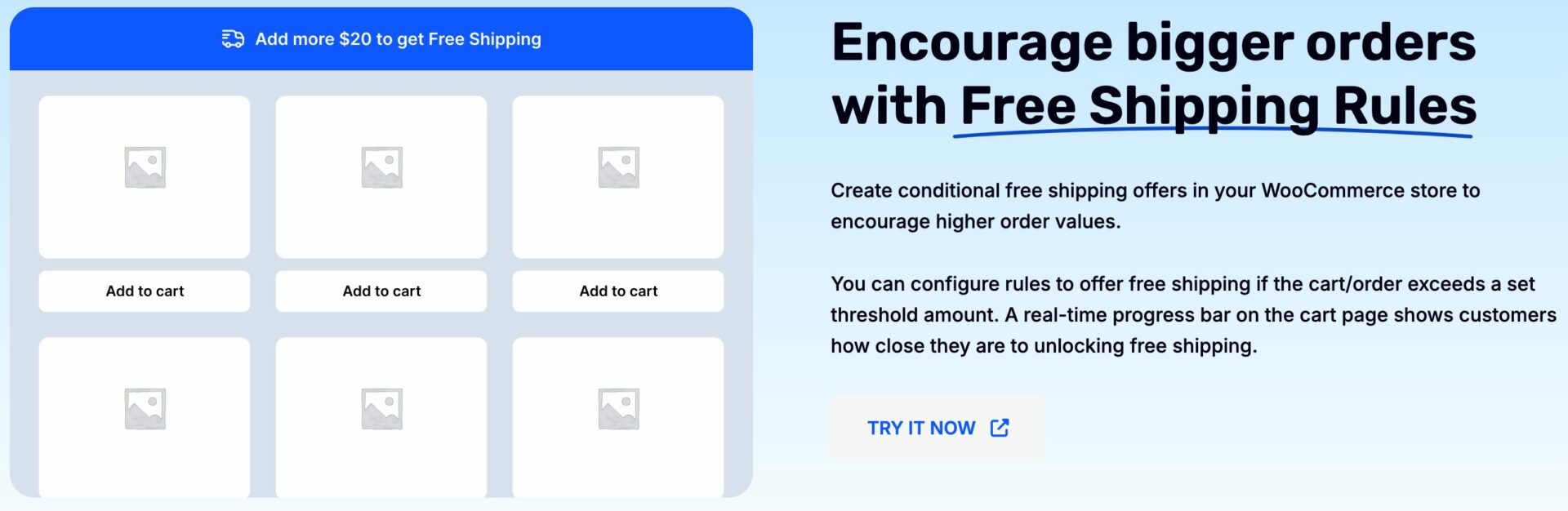
2. Free Shipping With Minimum Order Value
Customers get free shipping only if they spend a certain amount.
This is one of the most popular models. It works well because it increases average order value. Many shoppers add extra items just to reach the free shipping limit. Research shows that nearly 60% of shoppers do this.
3. Free Shipping for Members or Repeat Customers
Stores offer free shipping only to loyalty members or frequent buyers. This encourages people to sign up, stay active, and shop again.
4. Free Shipping for Selected Products or Categories
Some products get free shipping, while others don’t. This helps stores control costs. For example, small items may ship free, but heavy items may not.
5. Free Shipping by Region
Free shipping only in selected locations. This is useful when shipping costs vary by distance.

Different stores choose different models based on what fits their margin and customer base. The goal is to offer free shipping in a way that is attractive to customers and still realistic for the business.
How to Create Your Free Shipping Policy
A good free shipping policy should be clear, simple, and easy for customers to understand. It should also protect your margins. Here’s how to create one step by step:
1. Know Your Shipping Costs
Start by checking your average shipping cost per order. Look at weight, size, and delivery zones. This helps you understand how much you can afford to cover.
Many stores discover that their average cost is lower than expected when spread across all orders.
2. Choose the Type of Free Shipping
Decide if you want site-wide free shipping, a minimum order requirement, loyalty-based free shipping, or product-based free shipping.
Most new stores start with a minimum order value to encourage more spending and protect profit margins.
3. Set a Clear Minimum Order Value (If Needed)
If you choose conditional free shipping, set a threshold that increases your average order value.
A common method is to set the threshold 10–20% higher than your current AOV. This is high enough to boost sales but still easy for customers to reach.
4. Make Your Rules Simple
Avoid complex conditions. Customers like clear terms such as: “Free shipping on orders over $50.” Simple rules reduce confusion and help more customers qualify.
5. Show the Policy Early
Display your free shipping offer on product pages, in the cart, and during checkout.
Free shipping works best when customers know about it before they start checking out.
6. Test and Adjust
After launching your free shipping policy, track your results. Check conversion rate, average order value, and profit margins.
If margins are low, adjust the threshold. If conversions are low, make the offer more visible. A clear free shipping policy sets the right expectations and helps customers feel confident while shopping.
How to Cover the Cost of Free Shipping
Free shipping helps increase sales, but you still need to manage the cost. Many stores offer free shipping without hurting profit. They use a few simple methods to balance the expense.
1. Raise Product Prices Slightly
A small increase in product price can cover part or all of the shipping cost. Most shoppers accept this because they prefer a clear price with free shipping over a lower price with fees added later.
Studies show that customers are more sensitive to shipping fees than to product prices.
2. Use a Minimum Order Value
This is one of the safest ways to offer free shipping. When customers spend more to reach the threshold, the extra revenue helps cover shipping costs.
Around 60% of customers add extra items just to qualify for free shipping. This increases your average order value and protects your margins.
3. Offer Free Shipping Only for Lightweight Items
Some products cost much less to ship. By offering free shipping only on these items, you reduce overall shipping expenses while still giving customers a strong offer.
4. Limit Free Shipping to Certain Regions
Shipping across long distances can be expensive. You can offer free shipping only to areas where your shipping cost is predictable and low.
5. Give Free Shipping to Members or Repeat Customers
Loyalty-based free shipping works well because returning customers usually buy more over time. Their higher lifetime value helps cover the shipping cost.
6. Negotiate Better Shipping Rates
If your order volume grows, you can negotiate lower rates with carriers. Lower rates mean you can offer free shipping more easily.
These strategies help stores use free shipping as a sales tool without lowering profit. It becomes a balance between customer happiness and business sustainability.
Fast vs. Free Shipping: What’s More Important?
Both fast and free shipping matter, but customers often choose free shipping when they must pick one. Many studies show this trend. In one survey, about 75% of shoppers said they prefer free shipping over fast shipping. They want clear pricing more than speed.
This happens because shipping fees feel like an extra cost. Even small fees can stop a customer from buying. But waiting a few extra days often feels acceptable if the shipping is free. Customers feel they are getting better value.
That said, speed still matters. Some shoppers want fast delivery for urgent items. But for most everyday products, free shipping has more influence on the final buying decision.
This means offering free shipping, even if it is not the fastest option, can help increase overall conversions and reduce cart abandonment. It meets customer expectations and creates a smooth shopping experience.
Customer Expectations Around Free Shipping
Customer habits have changed over time. Today, free shipping feels normal to many online shoppers. They expect it from most stores, even small ones. This expectation grew as big brands made free shipping a standard feature.
Several studies show how strong this expectation is. Many shoppers say they check for free shipping before adding items to the cart. Others say they will leave a site if shipping fees appear too late in the process. And a large group says they will only buy from stores that offer free shipping.

Customers also expect clear rules. They want to know the free shipping limit right away. For example, if the threshold is $50, they want to see that before checkout. Clear communication helps them plan their order and avoid surprises.
Free shipping also affects trust. When customers see simple, transparent pricing, they feel more comfortable buying. They are more likely to complete the purchase, and more likely to return.
These expectations show that free shipping is not just a marketing feature. It has become a basic part of the shopping experience.
How to Communicate Free Shipping Offers Effectively
Free shipping works best when customers see the offer early and often. If customers notice it only at checkout, the impact is weaker. Clear communication helps increase conversions and reduce confusion.
1. Show the Offer on Product Pages
Place the free shipping message near the price or add-to-cart button. This is where customers look first. Seeing the offer early builds confidence.
2. Use a Sticky Bar or Header Notice
Many stores use a small bar at the top of the site that says “Free shipping over $50.” This keeps the offer visible on every page.
3. Remind Customers in the Cart
Show how much more they need to spend to qualify. A simple message like “Add $12 more to get free shipping” encourages bigger orders.
4. Keep the Message Simple
Avoid long explanations. Customers should understand the rule in one glance.
Clear messages work best, such as:
- “Free shipping over $50”
- “Free standard shipping on all orders”
5. Highlight It During Checkout
A quick reminder during checkout reassures customers. It also helps avoid cart abandonment caused by confusion.
6. Use Email and Social Media
Share your free shipping offer in newsletters, promotions, and social posts. Free shipping is a strong motivator for clicks and conversions.
Clear communication makes your free shipping policy feel like a benefit rather than a hidden condition. It improves customer experience and supports higher sales.
Setting Up Free Shipping on WooCommerce
WooCommerce makes it easy to offer free shipping. You can set it up in a few simple steps. You do not need coding or complex tools.
1. Go to Shipping Settings
In your WordPress dashboard, go to: WooCommerce → Settings → Shipping–
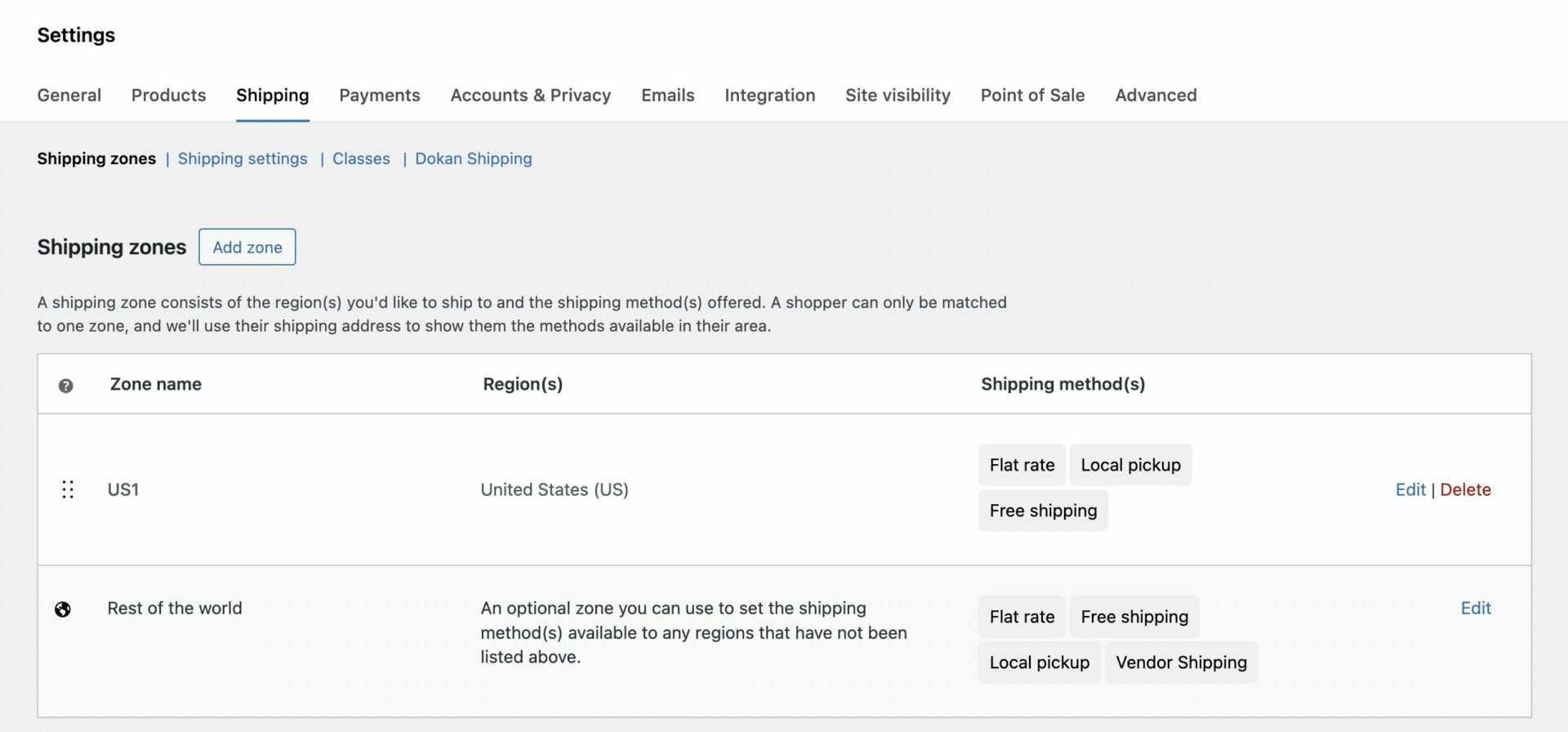
2. Create or Edit a Shipping Zone
Shipping zones decide where your free shipping will apply. Select an existing zone or create a new one based on location.
3. Add the Free Shipping Method
Inside the zone, click Add shipping method. Choose Free Shipping from the list.
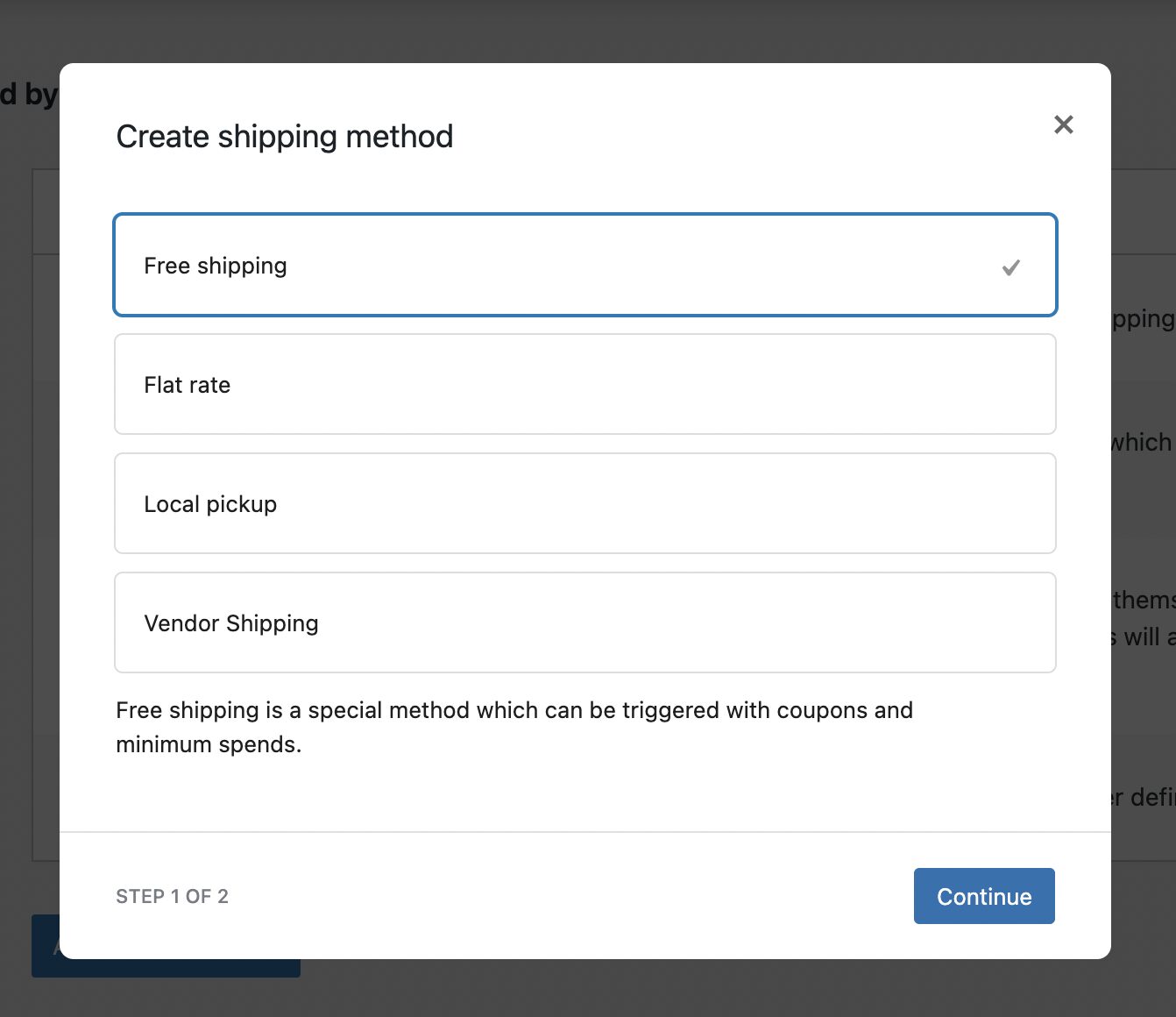
4. Set the Free Shipping Rules
WooCommerce lets you choose how free shipping will work. You can offer it:
- With a coupon
- With a minimum order amount
- With both a coupon and minimum order amount
- Without conditions
Most stores choose the minimum order amount because it boosts average order value.
5. Add a Clear Threshold
If you use a minimum order rule, enter the amount customers need to reach. Example: Free shipping on orders over $50.
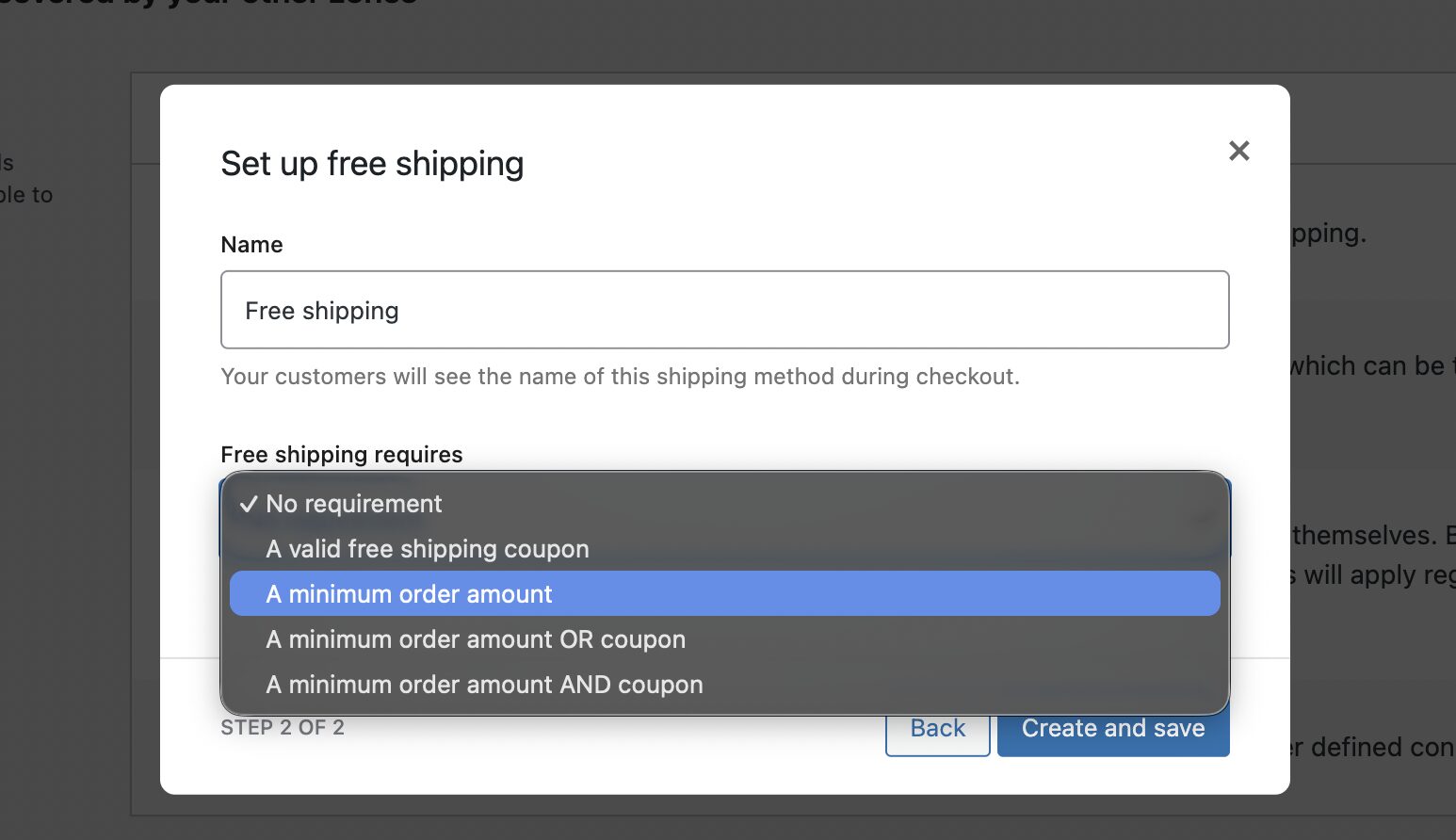
6. Save and Test
Test the cart and checkout to confirm the rule is working.
Bonus: How to Configure Free Shipping in Dokan
Dokan depends on WooCommerce shipping settings, but it adds useful tools for vendors who want to offer free shipping for their own products or stores.
Here’s how to set it up:
1. Enable Shipping for Vendors
Go to: WooCommerce → Settings → Shipping→ Dokan Shipping. Enable vendor shipping if it is not already active.
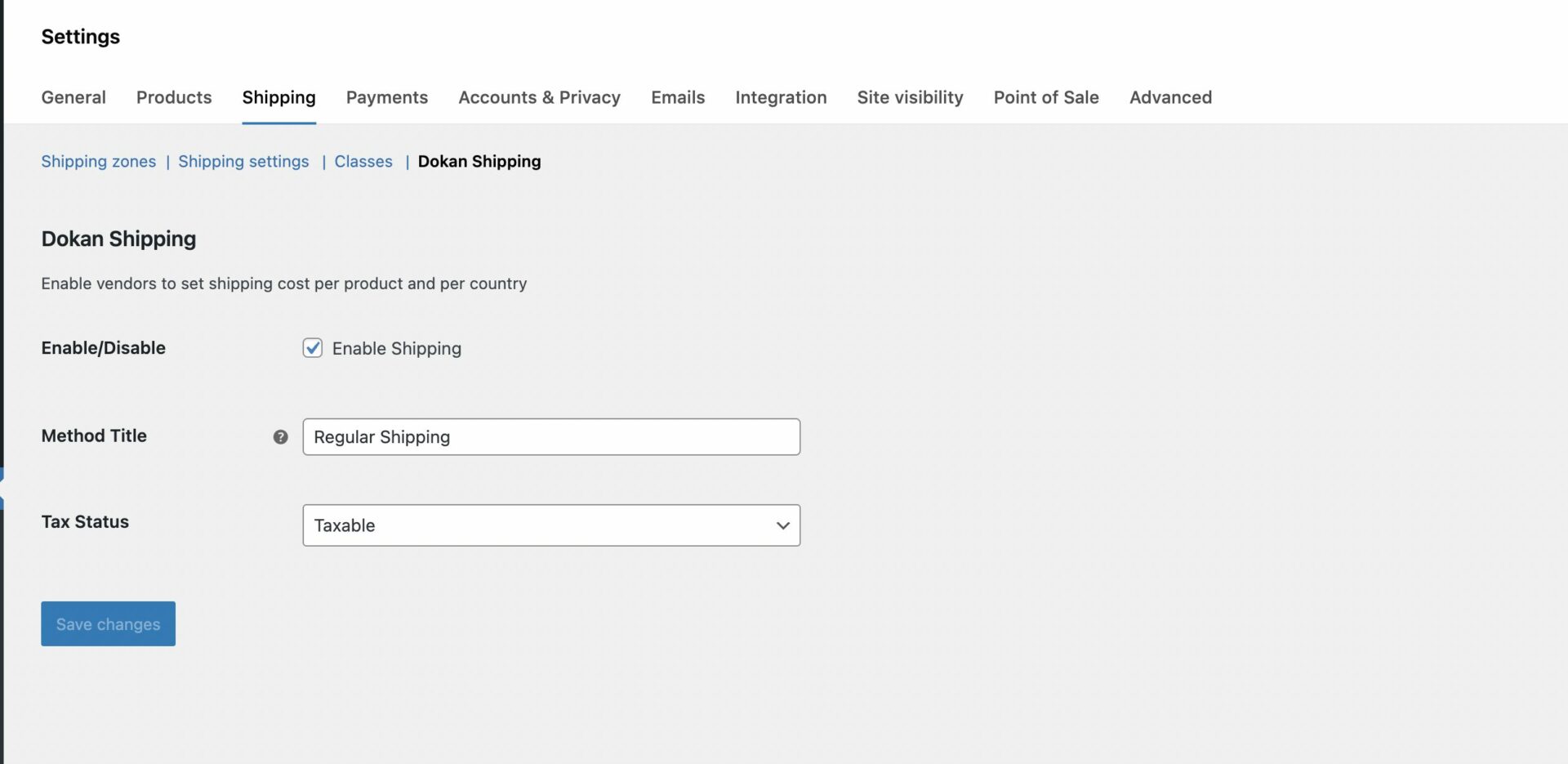
2. Let Vendors Manage Their Own Shipping
Make sure vendors have permission to set shipping rules from their dashboard. This gives each vendor control over their shipping zones and rates.
3. Vendors Set Free Shipping in Their Dashboard
Vendors can log in and go to: Vendor Dashboard → Settings → Shipping–
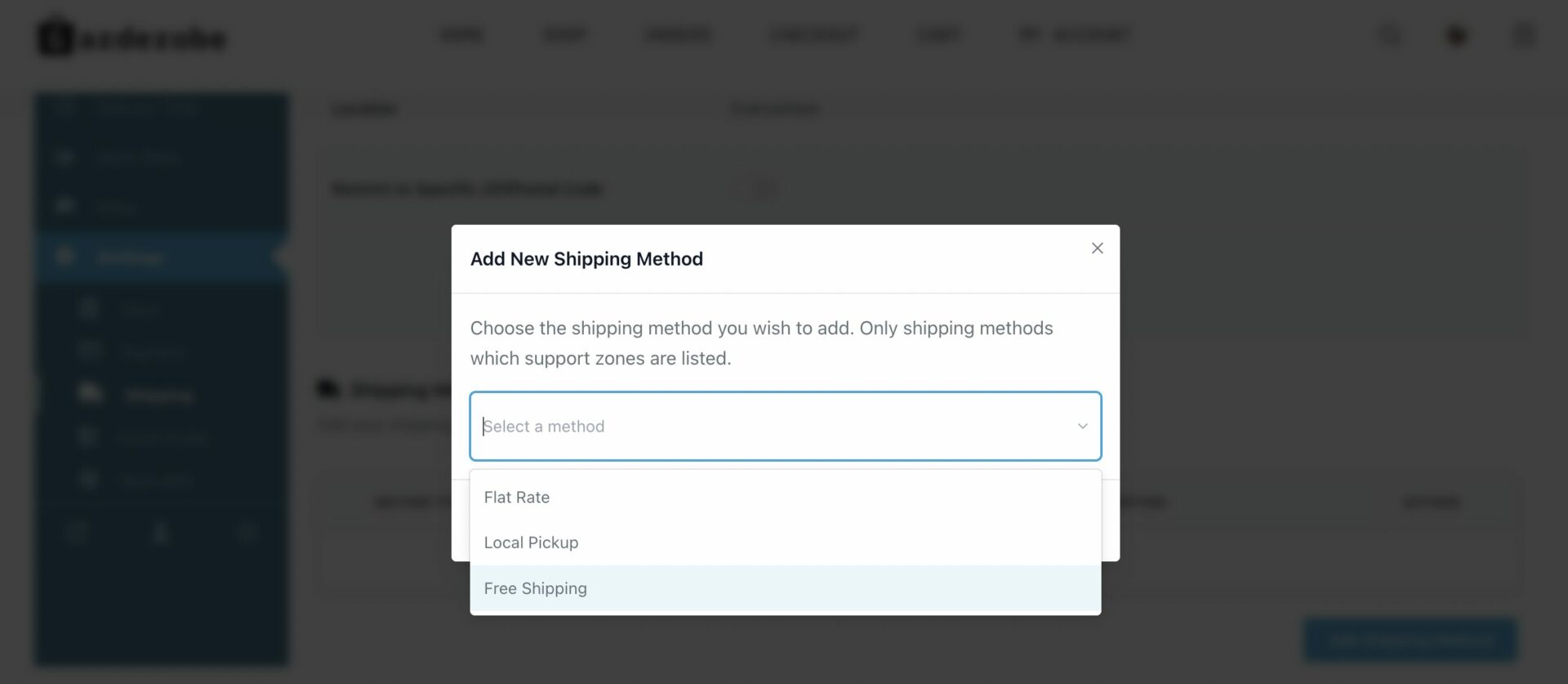
They can:
- Create shipping zones
- Add free shipping as a method
- Set minimum order value for free shipping
- Set product-level free shipping if needed
This is helpful for multi-vendor marketplaces where vendors may offer free shipping on selected products or for certain regions.
4. Test Vendor Settings
Add products from different vendors to your cart to make sure free shipping rules work correctly for each store.
Using Dokan and WooCommerce together gives marketplace owners and vendors flexible, simple control over free shipping.
Free Shipping FAQs
1. Does free shipping really increase sales?
Yes. Many studies show that free shipping can raise conversions. It also reduces cart abandonment because customers do not like surprise costs during checkout.
2. Is free shipping better than fast shipping?
For most shoppers, yes. Many buyers choose free shipping even if it takes longer. They prefer clear pricing over speed for most everyday purchases.
3. How can I afford to offer free shipping?
You can raise product prices slightly, set a minimum order amount, offer it only to members, or limit it to selected regions. These methods help cover shipping costs.
4. Should I offer free shipping on every product?
Not always. Free shipping works well for small or lightweight items. For heavy items, you may need other rules to avoid high costs.
5. What is a good free shipping threshold?
A common method is setting the threshold about 10–20% higher than your current average order value. This encourages customers to spend a bit more.
6. Does free shipping help repeat customers?
Yes. Free shipping makes customers feel valued. They remember stores that offer simple, clear pricing. This leads to more repeat orders.
7. Can I offer free shipping only in some locations?
Yes. You can limit free shipping to areas where shipping costs are low. This helps manage expenses.
8. Should I show free shipping info on product pages?
Yes. Customers want to see it early. If they see it only at checkout, it loses impact. Show it in banners, product pages, and the cart.
9. Can vendors in Dokan offer free shipping?
Yes. Vendors can set their own free shipping rules in their dashboard. Marketplace owners can also control how vendor shipping works.
Conclusion
Free shipping has a strong impact on buying decisions. It reduces cart abandonment, improves trust, and makes customers feel more comfortable completing their order. Many shoppers now expect free shipping as a normal part of online shopping, and they look for it before deciding to buy.
You do not need to offer free shipping on every product or in every region. You can set limits, use a minimum order value, or offer it only to repeat customers. These methods help you control costs while still giving customers what they want.
In the end, free shipping works when it is clear, simple, and easy to understand. When used the right way, it increases conversions, boosts order value, and helps your store grow.
Subscribe to
Dokan blog
We send weekly newsletters, no spam for sure!





Leave a Reply