



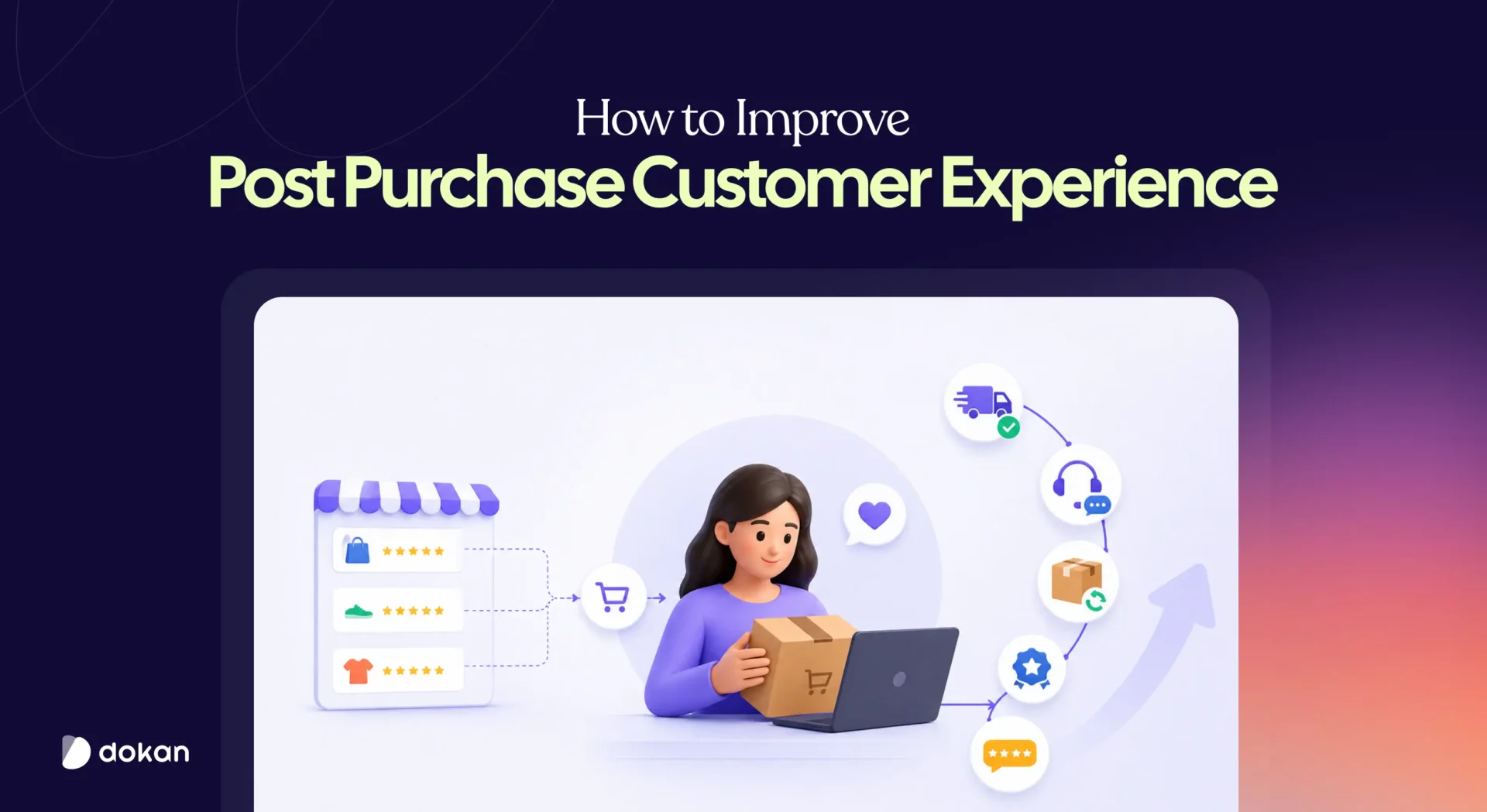
The buying journey does not end when a customer clicks the “Buy Now” button. In fact, the post-purchase customer experience begins from that very point. It includes everything that happens after an order is placed – confirmation, shipping, delivery, support, etc.
73% of consumers say customer experience is a key factor in their purchasing decisions — yet most businesses focus only on pre-sale interactions and completely overlook the post-purchase journey. (According to a PwC report)
Over time, this can reduce trust and damage the overall reputation of a marketplace. So, marketplaces built with solutions like Dokan, improving the post-purchase experience, are not just a small improvement – it is a core part of building a successful marketplace.
A smooth and well-managed post-purchase journey helps increase customer satisfaction, reduce complaints, and encourage repeat purchases. In this blog, we will explore practical, effective ways to improve the post-purchase customer experience.
What is Post Purchase Customer Experience?
Post-purchase customer experience refers to everything a customer goes through after completing a transaction. It covers order confirmation, processing, shipping updates, delivery, and after-sales support – all the touchpoints that define how a buyer feels about your platform long after checkout.
This phase shapes lasting impressions. When customers receive timely updates, smooth deliveries, and responsive support, they associate those positive feelings with your marketplace — not just the individual vendor they bought from.

Why Post Purchase Experience is Critical for Multivendor Marketplaces
Running a multivendor marketplace means managing a complex ecosystem where dozens or hundreds of independent sellers operate under one roof. That complexity makes the post-purchase experience phase critical for multivendor marketplaces. Take a look below:
a. Many Sellers, One Platform
Each vendor on your marketplace brings their own fulfillment process, shipping habits, and communication style. This diversity makes it difficult to maintain a consistent post-purchase experience across every single transaction that happens on your platform.
b. Different Vendor Service Quality
Not all vendors perform equally. Some ships quickly and communicate well, while others delay orders and ignore customer queries. When service quality varies this widely, the post-purchase experience becomes unpredictable and deeply inconsistent for marketplace shoppers. Learn how to improve vendor quality.
c. Risk of Poor Customer Experience
A single bad post-purchase experience — a missed delivery, an ignored complaint, or a delayed refund — can cause a customer to leave your platform entirely. In a marketplace where trust is built transaction by transaction, one poor outcome can undo months of loyalty building.

d. Impact on Platform Reputation
Poor vendor performance doesn’t just harm individual seller ratings. It damages your marketplace’s overall reputation. Negative reviews citing late deliveries or unresponsive support directly affect new visitor trust and conversion rates across your entire platform.
e. Affects Customer Retention and Trust
Retention is directly tied to post-purchase satisfaction. Customers who experience smooth order fulfillment, clear communication, and easy returns are far more likely to return. Trust earned after the sale is one of the most powerful drivers of sustainable customer relationships.
Key Stages of the Post Purchase Journey
Understanding the full post-purchase journey is the first step to improving it. Each stage is an opportunity to reassure, inform, and delight your customers — or to lose their confidence permanently if handled poorly.

Step 01: Order Confirmation
The moment a customer completes a purchase, they expect instant confirmation. A well-crafted order confirmation message sets a professional tone, reduces buyer anxiety, and gives customers a clear record of what they ordered, from whom, and when to expect it.
Step 02: Order Processing
After confirmation, customers want to know their order is being prepared. Timely processing updates show that your vendors are active and attentive. Delays at this stage are a leading cause of early customer frustration and unnecessary support tickets. Good order management can remarkably boost your sales.
Step 03: Shipping Updates
Once an order ships, customers enter a period of active anticipation. Proactive shipping notifications with tracking details significantly reduce “where is my order” queries. Real-time updates keep customers informed and build confidence in your marketplace’s reliability and transparency.
Step 04: Delivery
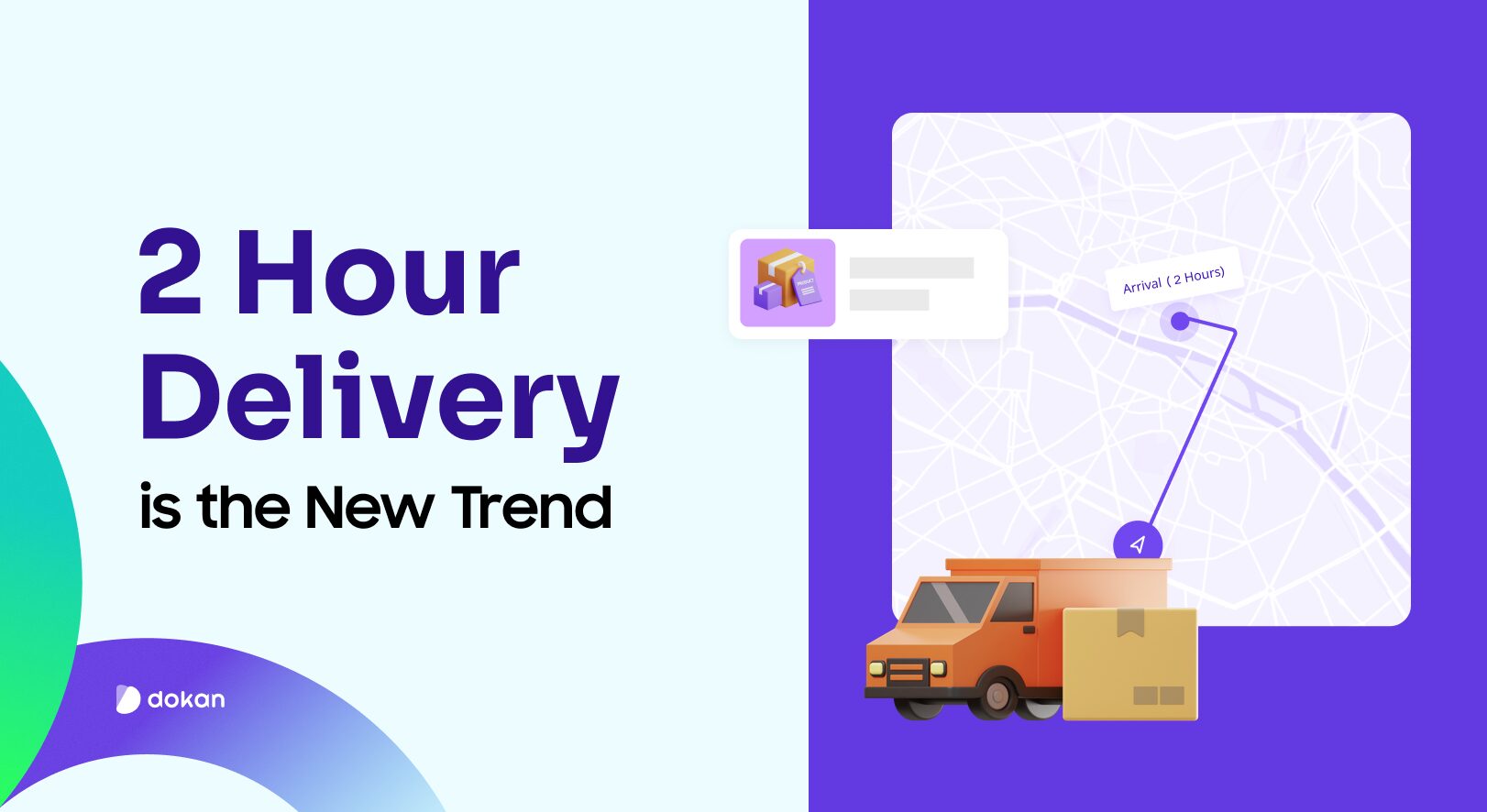
Delivery is the most emotionally significant touchpoint in the entire post-purchase journey. A successful, on-time delivery creates a moment of delight. A failed or damaged delivery, however, tests your platform’s ability to recover quickly and maintain customer trust under pressure.
Step 05: After-Sales Support
A great post-purchase experience doesn’t end at delivery. Customers may need help with returns, exchanges, or product issues. Fast, accessible, and helpful after-sales support transforms a potential complaint into a loyalty-building moment that encourages repeat purchases.
Common Post-Purchase Problems in Multivendor Marketplaces
Even well-managed marketplaces struggle with post-purchase gaps. Understanding these common pain points helps you identify where your platform needs structural improvements — before frustrated customers leave and share negative reviews publicly.
1. Delayed Shipping Updates
When customers don’t receive timely shipping notifications, they feel ignored. Delayed updates push them to contact support unnecessarily, increasing ticket volume and reducing satisfaction scores. Shipping delays are often caused by inconsistent vendor workflows.

2. Poor Vendor Communication
Some vendors fail to communicate with customers directly or through platform channels. When a customer’s question goes unanswered, or an issue is ignored, the marketplace’s reputation takes the hit — even if it was entirely the individual vendor’s fault. Check our module to improve vendor communication in the marketplace.
3. Confusing Return Policies
In a multivendor marketplace, different vendors often have different return policies. This inconsistency creates confusion for buyers who don’t understand what they’re entitled to. A clear return policy that overrides vendor variations is essential for customer clarity.
4. Lack of Tracking Transparency
Customers today expect full visibility into their order’s journey. If your marketplace doesn’t offer reliable, real-time order tracking, customers grow anxious. This lack of transparency leads to trust issues, negative reviews, and increased pressure on your customer support team.
5. Inconsistent Customer Experience
When one vendor delivers a five-star experience, and another delivers a poor one, the overall marketplace brand suffers. Inconsistency is one of the biggest post-purchase problems in multivendor platforms that requires systematic solutions.

6. Lack of Proper Documentation
Without clear order records, invoice histories, and refund documentation, both customers and admins face confusion. Proper documentation serves as the foundation for resolving disputes, processing returns, and building the kind of transactional transparency.
How to Improve Post-Purchase Customer Experience (Actionable Tips)
Improving post-purchase experience in a multivendor marketplace requires a combination of automation, vendor accountability, and customer-centric systems. Below are the most impactful strategies platform owners can implement today.
Tip 01: Automate Order Notifications
Automated order notifications are the simplest and most effective way to improve post-purchase communication. When customers receive instant updates at every stage — confirmation, processing, shipping, and delivery — they feel informed, respected, and confident in your marketplace’s operations.
Email and SMS Updates
Set up automated email and SMS notifications triggered by every order status change. Email works well for detailed updates, while SMS is ideal for urgent alerts like dispatch confirmations or delivery scheduling. Together, they ensure no customer is ever left.
Status Changes in Real Time
Real-time status updates reduce uncertainty and eliminate the frustration of customers manually checking their accounts. Connecting your order management system with automated triggers ensures every status change — from “processing” to “shipped” to “delivered.”
Tip 02: Improve Vendor Accountability
Vendor accountability is central to a consistent post-purchase experience. When vendors know they are being monitored and evaluated, they are far more likely to fulfill orders on time, communicate proactively, and handle customer concerns before they escalate into formal disputes or negative reviews.
Performance Tracking
Track each vendor’s order fulfillment rate, shipping speed, response time, and return handling. Sharing these metrics with vendors creates healthy competition and motivates underperformers to improve. Regular performance reviews also help admins identify repeat offenders before they cause widespread customer dissatisfaction.
Vendor Rating System
A transparent vendor rating system empowers customers to make informed purchasing decisions. It also incentivizes vendors to maintain high service standards. Low-rated vendors should receive warnings, training resources, and, if necessary, temporary restrictions until their post-purchase performance measurably improves.
Clear Delivery Rules
Establish platform-wide delivery rules that all vendors must follow. Define maximum dispatch times, required tracking methods, and packaging standards. Vendors who consistently violate these rules should face escalating consequences — ensuring your marketplace’s delivery standards stay high across every seller and every transaction.
Tip 03: Use Centralized Order Management
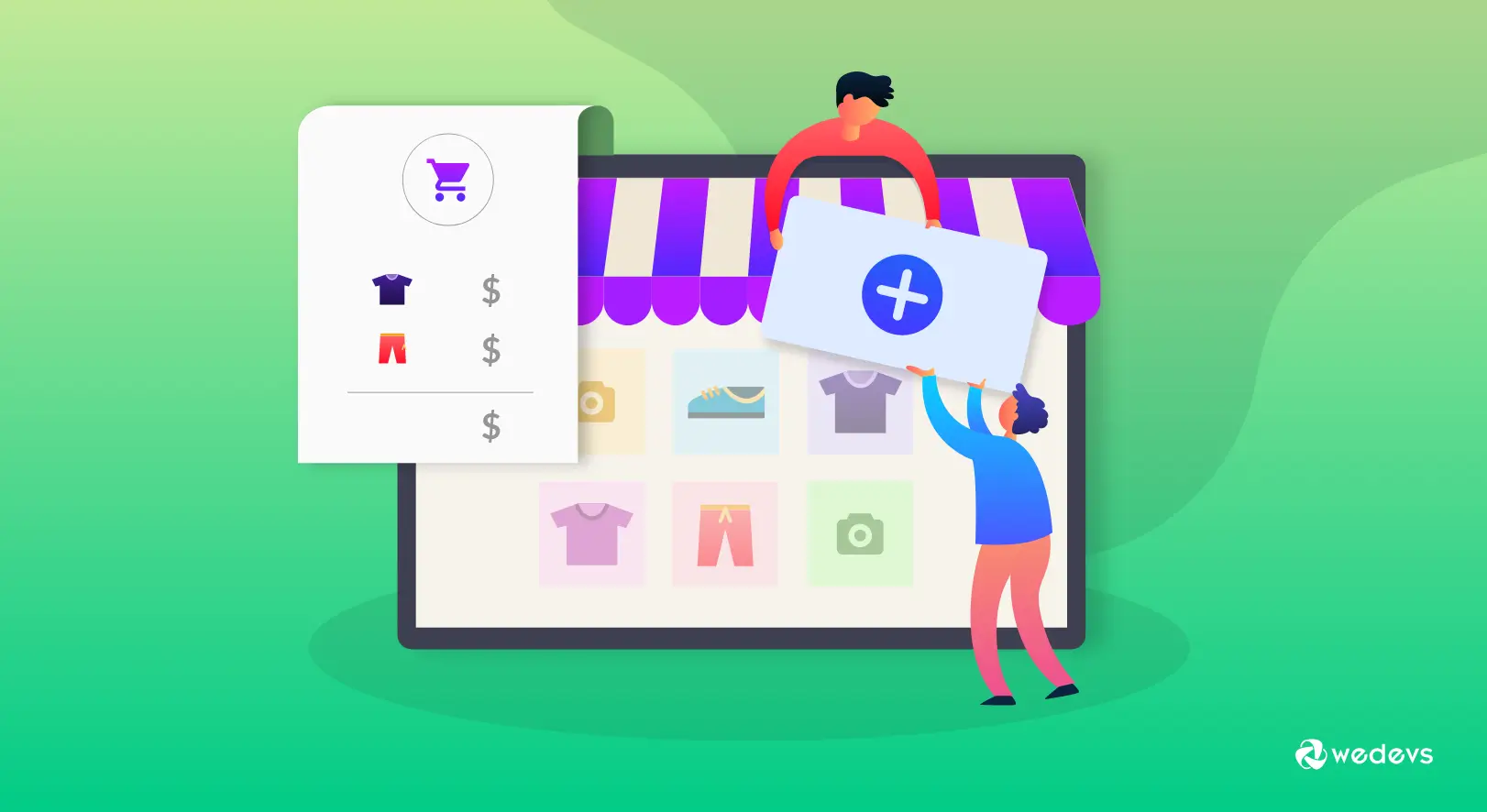
A centralized order management system gives admins complete visibility into every transaction on the platform. Instead of relying on individual vendors to self-report, admins can monitor order progress, flag delays, and intervene before a poor experience reaches the customer and damages your reputation.
One Dashboard for Admin Control
A unified admin dashboard allows marketplace operators to view all orders across all vendors in a single interface. This eliminates blind spots, speeds up issue resolution, and gives admins the real-time data needed to manage post-purchase experience at scale efficiently.
Better Monitoring of All Vendors
With centralized monitoring, admins can quickly identify which vendors are consistently delayed or generating the most customer complaints. This data-driven oversight replaces guesswork with actionable insights — allowing you to proactively manage vendor quality and protect the overall marketplace experience.

Tip 04: Strengthen Customer Support System
Your customer support system is the safety net of your post-purchase experience. No matter how good your automation is, some issues will require human intervention. A strong, responsive support system prevents negative experiences from turning into permanent customer losses or damaging public reviews.
Faster Ticket Handling
Set internal SLAs (Service Level Agreements) for ticket response and resolution times. Route tickets intelligently based on issue type — shipping problems to fulfillment teams, refund requests to finance. Faster resolution means happier customers and fewer escalations that consume valuable operational resources. Check the best customer service software for eCommerce.
Multi-Channel Support
Offer support across multiple channels — live chat, email, and a help center. Different customers prefer different communication methods. Meeting them on their preferred channel increases satisfaction and reduces the friction that often causes customers to abandon resolution attempts entirely and leave negative reviews.
Tip 05: Simplify Return and Refund Workflow
A smooth, transparent return and refund management is one of the strongest trust signals your marketplace can offer. Customers who know they can return a product easily are far more willing to make a first purchase — and far more likely to return after a smooth return experience.
Clear Steps for Customers
Guide customers through the return process with simple, step-by-step instructions. Avoid jargon and confusion. A well-designed return flow — accessible directly from the order page — reduces support queries, speeds up resolution, and communicates that your marketplace takes customer satisfaction seriously.
Faster Approval System
Slow refund approvals frustrate customers and erode trust. Build an efficient workflow where vendors are notified immediately about return requests and given a strict deadline to approve or dispute. Admin oversight ensures no return request sits unaddressed, protecting customers from prolonged financial uncertainty.
Transparent Refund Tracking
Once a refund is approved, customers should be able to track its progress. A visible refund status — from approved to processed to received — reduces follow-up queries and demonstrates accountability. Transparency at the refund stage can transform a negative experience into a loyalty-building one.

Tip 06: Ensure Proper Documentation
Every post-purchase interaction should generate a clear record. Invoices, order confirmations, return receipts, and refund confirmations all serve as legal and operational documentation. Proper record-keeping protects both customers and vendors and provides admins with the evidence needed to resolve disputes fairly.
Platforms that generate downloadable invoices and maintain accessible order histories build credibility and transparency. Customers who can retrieve their purchase documentation easily trust the platform far more — and are significantly more likely to return for future purchases and recommend the marketplace to others.

How Dokan Multivendor Marketplace Builder Simplifies Post-Purchase Experience
Dokan Multivendor Marketplace plugin is built specifically to address the operational complexity of running a WordPress-based multivendor marketplace. It provides tools that help admins systematize post-purchase workflows, reduce manual intervention, and maintain consistent quality standards across all active vendors.

1. Vendor Management and Order Handling
Dokan gives each vendor their own dedicated dashboard where they can manage orders, update shipping status, and respond to customer queries. This structured vendor management system ensures that post-purchase responsibilities are clearly assigned — reducing the chances of orders falling through the cracks.
2. Automation of Notifications and Updates
With Dokan, automated email notifications are triggered at every order stage — from placement to delivery. This ensures customers always receive timely updates without requiring manual effort from vendors or admins. Automation reduces human error and creates a consistently professional post-purchase communication experience.
3. Centralized Control for Admins
Dokan’s admin panel provides a comprehensive overview of all marketplace activity. Admins can monitor vendor performance, review order statuses, manage disputes, and enforce platform policies from one centralized location. This level of oversight is essential for maintaining post-purchase quality at scale across a growing vendor base.
4. Better Customer Trust Through Structured Systems
When customers experience consistent order updates, clear policies, and responsive support, they trust the marketplace — not just the individual vendor. Dokan’s structured systems help build that platform-level trust by ensuring every vendor operates within a defined, customer-focused post-purchase framework that prioritizes buyer satisfaction.
What Happens When You Improve Post-Purchase Experience
Investing in post-purchase experience isn’t just about fixing problems — it’s about unlocking tangible business outcomes. The improvements you make today directly impact your marketplace’s growth trajectory, reputation, and long-term sustainability in an increasingly competitive eCommerce landscape.

a. Higher Repeat Purchases
Customers who have a positive post-purchase experience come back. Repeat buyers are the most valuable segment of any marketplace’s customer base. They spend more, cost less to retain, and are more forgiving of occasional issues — making post-purchase excellence a direct driver of long-term revenue growth.
b. Better Customer Reviews
Satisfied customers leave positive reviews. Positive reviews attract new buyers. This virtuous cycle is powered almost entirely by great post-purchase experiences. Marketplaces with strong review profiles consistently outperform competitors in organic search rankings, customer acquisition costs, and overall conversion rates. Check how to improve the customer conversion rate.
c. Lower Refund Disputes
When customers receive accurate orders on time, backed by clear communication and easy return options, the rate of refund disputes drops significantly. Fewer disputes mean less strain on your support team, healthier vendor relationships, and a cleaner financial operation — all of which compound into a stronger marketplace over time.
d. Stronger Marketplace Reputation
Your marketplace’s reputation is built on the collective quality of every post-purchase experience you deliver. Consistent excellence across vendors creates a brand that buyers trust intrinsically. In a crowded eCommerce space, reputation is your most durable competitive advantage — and post-purchase experience is its foundation.

e. Increased Vendor Performance Quality
When admins track and reward post-purchase performance, vendors raise their standards. High-performing vendors attract more sales, which motivates other vendors to improve. This competitive dynamic elevates the entire marketplace — creating a self-reinforcing cycle of quality that benefits every stakeholder involved.
Conclusion
Post-purchase experience is where customer loyalty is truly won or lost. In a multivendor marketplace, the stakes are even higher because inconsistency across vendors can quickly undermine the trust you have spent significant time and resources building across your entire platform.
By automating notifications, enforcing vendor accountability, centralizing order management, and simplifying return workflows, you create a post-purchase environment that consistently delights buyers. Tools like the Dokan Multivendor Marketplace plugin make implementing these systems practical and scalable for WordPress-based marketplace owners.
Start investing in your post-purchase experience today — because the customers who feel supported after the sale are the ones who come back, leave great reviews, and help your marketplace grow sustainably for years to come.
Before moving away, spare a few more minutes to explore the essential tools required for any WooCommerce store.


Leave a Reply