


Most marketplace ideas do not fail because the software was wrong. They fail because nobody needed the thing in the first place, and the founder found out eighteen months and a development budget later.
The usual advice is to validate before you build. That advice is right, but the version you will read almost everywhere was written when building a marketplace meant a six-figure quote and half a year of engineering. Under those conditions, months of surveys and landing pages made sense.
Those conditions changed. A working marketplace can now be running by this evening for nothing, which changes what validation should even look like. So the way to validate your marketplace idea has changed too. This guide covers what you are actually testing, the four tests worth running, the two nobody runs, and how to decide in advance what result means stop.
TLDR
- You are not validating one idea. You are validating four things. Demand, supply, the transaction, and your commission.
- Stated intent is worthless. “I would definitely use this” predicts nothing. Only revealed behaviour counts, which means money, calendar time, or a signed list.
- Validate the harder side first, which is almost always supply. Buyers are easy to attract to something that already works.
- Two tests almost nobody runs decide whether the business can exist at all. Will sellers pay your commission, and will both sides go around you after the first deal.
- Set your kill criteria in writing before you start, or you will move the goalposts.
- Elaborate pre-build validation exists because building used to be expensive. It is not anymore, so the fastest honest test is often a real marketplace with real listings.
Validate Your Marketplace Idea in Four Parts, Not One
Most founders treat this as one question. Does anybody want my marketplace? That is four questions wearing one coat, and they fail independently.
| What you are testing | The question | What a pass looks like |
|---|---|---|
| Demand | Will buyers change their current behaviour to use you? | They pay, pre-order, or book time |
| Supply | Will sellers list, maintain a profile, and fulfil? | They complete onboarding unpaid |
| The transaction | Does the exchange actually work end to end? | You complete ten by hand |
| The commission | Will sellers give up a cut for what you provide? | They accept a stated rate in writing |
A marketplace can pass three of these and still be dead. Plenty of them have demand, supply, and a working transaction, and no viable business, because the sellers will not part with 15 percent for something they were already managing over WhatsApp.
The Six Tests, in Order
Run them in this sequence, because each one is only worth doing if the previous one passed.
| Test | What it answers | Time |
|---|---|---|
| 1. The behaviour test | Is the problem real, based on what people already did about it | 1 week |
| 2. The ten-seller test | Will the supply side actually do the work | 2 to 4 weeks |
| 3. The concierge test | Does the transaction hold together end to end | 2 weeks |
| 4. The commission test | Will sellers pay you for it | 1 week |
| 5. The bypass test | Do they still need you next month | 1 month, running in the background |
| 6. Kill criteria | What result means stop, written down first | 1 hour, before you start |
Six is fewer than it looks. Tests one to four are about six weeks of part-time work, the bypass test runs while you do other things, and kill criteria take an afternoon. Each one is expanded below.
The Behaviour Test, and Why Stated Intent Tells You Nothing
The single most common validation mistake is asking people whether they would use it. They say yes. They mean it. Then they do not.

This is not dishonesty. Answering a hypothetical costs nothing, so the answer reflects politeness and imagination rather than behaviour. CB Insights has repeatedly found lack of market need among the top reasons startups fail, and a good share of those founders had positive survey results in hand.
So structure every test around something that costs the participant. Money is the strongest signal. A calendar commitment is next. A public commitment, like a name on a waitlist they will be contacted about, is weaker but still real.
The test to use instead. Never ask “would you use this.” Ask “what did you do the last time you needed this, what did it cost you, and what went wrong.” Past behaviour is checkable. Future intent is not.
Our guide on marketplace mistakes to avoid covers what happens when this step gets skipped.
The Ten-Seller Test, Start With the Harder Side
Every two-sided marketplace hits the chicken and egg problem. The demand side will not come without the supply side, the supply side will not come without buyers, and on day one you have neither.
There is no trick that starts both at once. Every marketplace that worked built one side by hand, unscalably, until the other had a reason to appear. So the question is which side, and the answer is consistent. Build the side that creates the value, because the side that only consumes it is easy to attract once there is something worth consuming.

- A hiring marketplace needs candidates before employers.
- A delivery app needs restaurants before diners.
- A rental marketplace needs listings before renters.
- A services marketplace needs providers before clients.
In practice that is nearly always supply, and supply is also the harder recruit, since sellers are being asked to invest effort with no proven return.
How to Run It
Try to recruit ten sellers before you build anything. Not ten who say they are interested. Ten who complete whatever onboarding you can fake, by hand, over email or a spreadsheet.
What you learn is worth more than the ten sellers. You learn the objections you will hear at scale, what evidence of demand they need before committing, and how long each one takes to close. If ten takes you three months of full-time effort, your growth model has a number in it now, and it is a bad one.
The Concierge Test: Run the Transaction by Hand
This is the concierge approach, and it is the step founders most want to skip. Before you automate anything, run the exchange yourself. Match buyer to seller over the phone. Take payment by transfer. Chase the delivery. Handle the complaint.
This is unglamorous and it is the most informative week you will spend. Software is very good at automating a transaction that works and completely unable to fix one that does not.
Ten completed transactions by hand tells you where trust breaks, who complains and about what, whether either side actually needs you after introductions, and what the real unit economics look like once you have paid for the failures.
The Commission Test
Here is the first of the two tests almost nobody runs, and it decides whether you have a business rather than a hobby.
Go to your ten sellers with a number. Fifteen percent, or ten, or whatever your model needs. Say it out loud and watch what happens.

Three things can come back. They accept, which is the strongest validation available. They negotiate, which is also a pass, because negotiating means they see value and are haggling over price. Or they explain what they would need before that felt fair, which tells you exactly what you are actually selling.
Founders skip this because it feels premature. It is the opposite. A marketplace that cannot charge is a directory, and directories are a much harder business. Our breakdown of what it costs to build a marketplace website is worth reading alongside your commission maths, since the two together decide whether the model closes.
The Bypass Test, or Disintermediation Risk
The second test almost nobody runs. After you introduce a buyer to a seller, do they need you for the next one?
For many categories, the honest answer is no. If a homeowner finds a plumber through you, they will call that plumber directly next time, and both parties prefer it because neither pays your cut. Marketplaces in that situation have to earn their place on every transaction rather than owning the relationship.
You can test this before writing any code. Run your ten manual transactions, then wait a month and ask both sides what happened next. If they transacted again without you, you have learned the most important thing about your idea, and it cost you a month rather than a funding round.
Categories where repeat business naturally bypasses the platform are not unbuildable. They just need a different reason to exist, usually payments, guarantees, dispute handling, or finding new supply rather than access to supply they already know.
Kill Criteria, Decide What Failure Looks Like First
Write down, before you start, the numbers at which you stop. Founders who skip this step do not stop. They reinterpret.
Reasonable kill criteria look like this.
- Fewer than five of your ten target sellers complete onboarding.
- Nobody accepts or negotiates your commission, they all decline outright.
- You cannot complete ten manual transactions in a month.
- More than half of matched pairs transact again without you.
- Buyer acquisition costs more than your commission on three transactions.
Any single one of those is a signal to change the idea rather than build it. Two of them together is a signal to stop.
When Validating Costs More Than Building
This is where most marketplace validation advice is now out of date, and the reason is worth understanding rather than taking on faith.
The standard playbook, months of surveys and smoke-test landing pages before a line of code, comes from an era when a marketplace build meant a six-figure quote and half a year of engineering. Against that cost, spending three months on validation was obviously correct.
The advice survived. The cost did not. A working multivendor marketplace with vendor registration, individual storefronts, commission handling, and payouts can now be running in an afternoon, and the software half can cost nothing.
Which changes the calculation. A fake landing page tests whether people will click. A real marketplace tests whether they will transact. If both take a weekend, the second is a better test, and you are not left throwing away the thing you built when it works.
Note what has not changed. You still have to recruit sellers by hand, still have to prove the transaction, still have to test your commission. The software was never the hard part, which is exactly why it should not be the expensive part either.
Validate on a Real Marketplace With Dokan and FlyCommerce
If you accept the argument above, you need a marketplace you can stand up quickly, cheaply, and without committing to a platform before you know whether the idea works. Two options cover the realistic range.
Dokan, if you want to own it
Dokan turns a WordPress site into a multi-vendor marketplace. Vendors register themselves, get their own storefront and dashboard, list their own products, and your commission is calculated automatically on every order.

For validation, the relevant part is that Dokan Lite is free. You can run a real marketplace with real vendors and real orders at no software cost, which means the only thing you are spending during validation is your own time. If the idea works you upgrade. If it does not you have lost nothing.
It also means your validation environment is your production environment. There is no migration between the thing you tested with and the thing you launch, which is where a surprising amount of early momentum usually goes.
FlyCommerce, if you want it hosted
FlyCommerce is the hosted route, formerly Dokan Cloud. There is no WordPress to install, no hosting to configure, no plugins to maintain. You sign up and you have a marketplace.
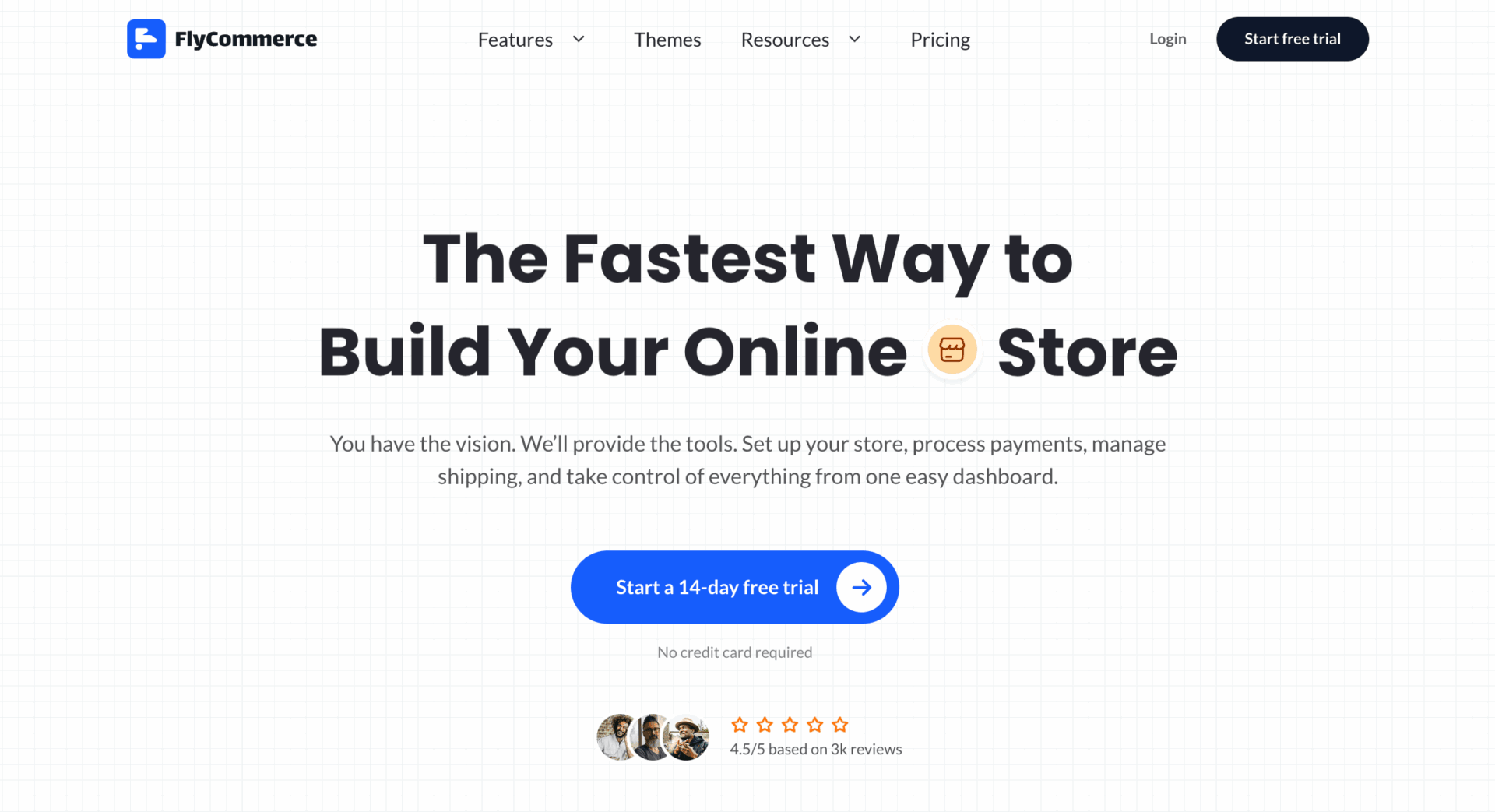
That suits a different kind of founder. If you are validating a marketplace idea and have no interest in server management, or you want to be selling this week rather than learning WordPress, the hosted option removes the entire technical layer from your validation phase.
Which one for validation
| Your situation | Start with |
|---|---|
| You already run a WordPress site | Dokan, since the free version costs nothing to try |
| You want zero technical setup | FlyCommerce |
| You want to own your data and code long term | Dokan |
| You want to be live in an hour with no infrastructure | FlyCommerce |
| You are testing several ideas at once | Dokan, one free install each |
Both give you the same thing for validation purposes, which is a marketplace where a real seller can list a real product and a real buyer can complete a real order. That is a stronger signal than any survey. Our full comparison of Dokan and FlyCommerce covers the longer-term decision once the idea is proven.
Frequently Asked Questions
1. How long should validating a marketplace idea take?
Four to eight weeks for the tests above, if you work at it. Longer than that usually means you are avoiding a result rather than gathering one. The ten-seller test is the pacing item, since everything else depends on having sellers to test with.
2. How many customers do I need before I know?
Fewer than you think for a clear negative, more than you think for a clear positive. Ten sellers and ten completed transactions will tell you decisively if the idea is wrong. Confirming it is right takes repeat behaviour, which means watching those same people come back. Repeat transactions are the first real signal of product-market fit.
3. Should I build the buyer side or the seller side first?
Whichever side creates the value the other side comes for, which is almost always supply. A buyer arriving at an empty marketplace leaves and does not return. A seller arriving at one with no buyers can still be persuaded, if you are honest about the stage and generous with the terms.
4. Can I validate without any sellers by faking listings?
You can test whether buyers are interested, and some well-known platforms did exactly that early on. What you cannot test is whether the transaction works, because there is nothing behind the listing. Treat faked supply as a demand test only, and never take a payment against it.
5. What if a competitor already does this?
That is usually good news, since it means somebody already proved demand exists. Your validation question changes from whether people want this to whether they will switch, which is a harder question but a more answerable one. Ask your ten sellers what would make them leave the platform they use now.
6. Do I need a business plan before validating?
No, and writing one first tends to make you defend assumptions instead of testing them. What you do need is your commission model and your kill criteria written down, because both shape the tests. The plan is what you write afterwards, using what you learned.
Test the Idea, Not the Software
To validate your marketplace idea properly you need answers to four questions, plus two that almost nobody asks. Will buyers change their behaviour, will sellers do the work, does the transaction hold together, will anybody pay your commission, and will both sides still need you next month.
None of those are answered by a survey, and none of them are answered by better software. They are answered by recruiting ten sellers by hand, completing ten transactions yourself, naming a commission out loud, and writing down in advance what result would make you stop.
The part that has genuinely changed is the cost of having a real marketplace to run those tests on. It used to be the expensive step, which is why an industry grew up around avoiding it. Now it is the cheap step, and skipping it means testing a fake version of your idea when the real one was available all along. If you would rather start from a working build, our guide on building an online marketplace from scratch picks up from here.
Subscribe to
Dokan blog
We send weekly newsletters, no spam for sure!





Leave a Reply