

According to eMarketer Research, the Global e-commerce reached about $6.42 trillion in 2025. Nearly 20% of them were retail. The multi-vendor marketplace model captures a growing slice of that spending. The following statistic makes it crystal clear.
The global multivendor marketplace sector reached roughly $643.5 billion in 2025. It’s on track for about $711.7 billion in 2026 and projected to hit $1,064.9 billion by 2030.
Next Move Strategy Consulting research.
CS-Cart Multi-Vendor is a familiar name among marketplace owners. It is a capable, standalone platform packed with built-in features. Yet many founders eventually explore alternatives, usually over cost, flexibility, or a desire for fuller control of their own store.
If you are one of them, this article will be helpful a lot to you. We’ll help you explore the best and top alternatives to CS-Cart Multi-Vendor, including their features, pricing, and other factors, so you can choose the right one. Get started!
Why You May Look for a CS-Cart Multi-Vendor Alternative?
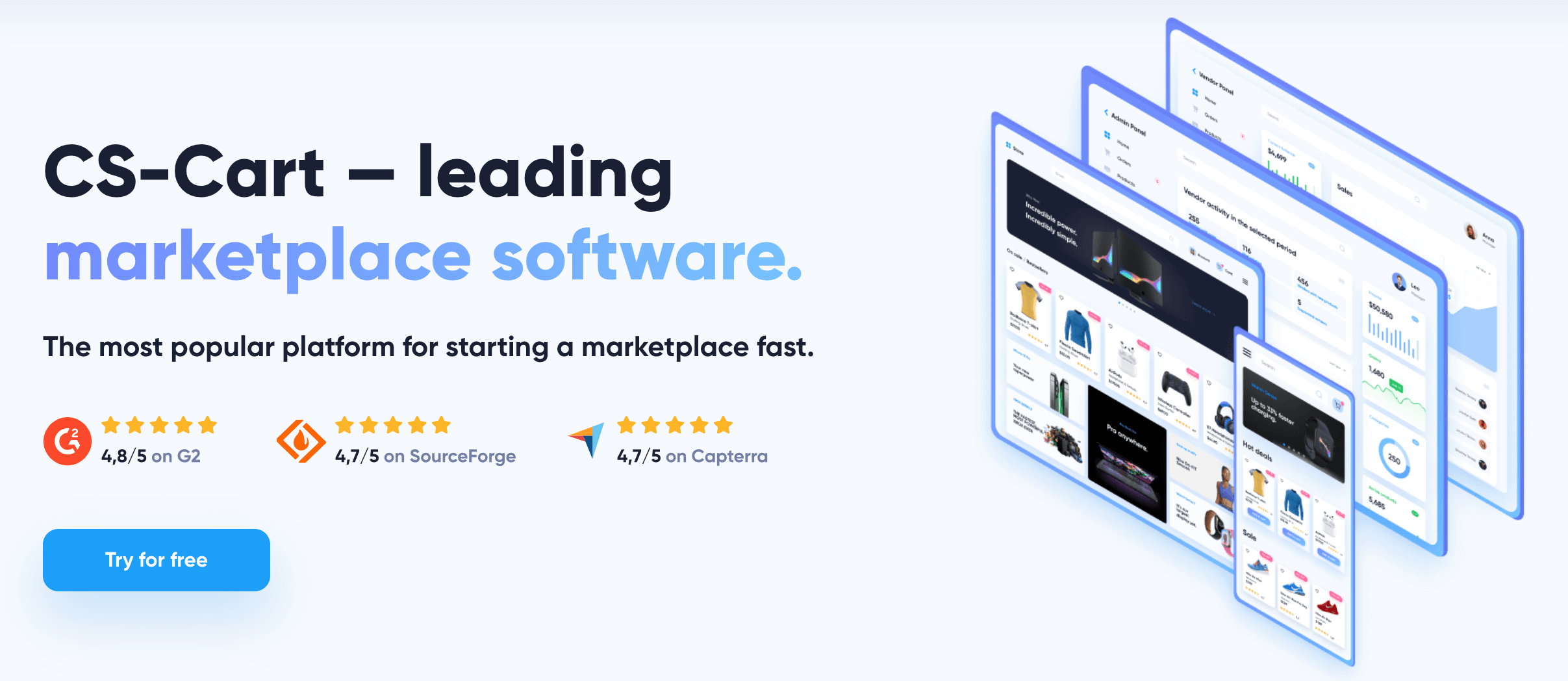
CS-Cart uses a license-based model. Lifetime plans start around $3,590 billed once, while a full marketplace setup with license, configuration, payments, and hosting can begin at around $7,500. For lean startups, that upfront cost feels heavy.
Cost is only part of the story. Reviewers on Capterra frequently mention paid addons, recurring theme renewals, and upgrade fees that stack up over time. Support also becomes a paid service once the initial window closes, which can strain smaller teams on a budget.
None of this makes CS-Cart a poor product – but it simply is not right for everyone. Many owners want lower entry costs, open ecosystems, and the freedom to customize without specialist developers. That search for flexibility is what leads people to the alternatives below.
What to Look for in a Multi-Vendor Marketplace Platform
Before comparing names, it’s a must to know what separates a good marketplace builder from a frustrating one. The right platform should support growth instead of fighting it. Keep your evaluation practical, and weigh every option against the core criteria that follow here.
- Easy setup: You should be able to launch without heavy custom coding or a full development team.
- Vendor-friendly dashboard: Sellers need a clean, intuitive space to manage products, orders, and payouts.
- Flexible payments: Look for multiple gateways, automated commissions, and reliable vendor split payments.
- Strong support and community: Active forums, documentation, and quick help save countless hours.
- Cost control: Predictable pricing matters far more than a low headline figure with hidden extras.
- Data ownership: You should fully own your store data, not rent access to it from a vendor.
- Extension ecosystem: A rich library of themes and extensions lets your marketplace evolve over time.
Read this blog post on the ultimate guide to multi-vendor marketplace platforms.
Quick Comparisons (Top Alternatives to CS-Cart Multi-Vendor)
Here is a side-by-side snapshot of the ten platforms covered in this guide. Use it as a fast reference, then read the detailed breakdowns below for the context behind each verdict. Dokan leads the list as the most balanced all-around option for most owners today.
| Platform | Best For | Built On | Pricing Model | Coding Needed | Vendor Dashboard |
|---|---|---|---|---|---|
| Dokan | Most marketplaces | WordPress + WooCommerce | Free core + paid tiers | Minimal | Excellent |
| Magento | Enterprise | Standalone (PHP) | High dev + license cost | High | Strong |
| Shopify + Apps | Fast SaaS launch | Hosted SaaS | Monthly + app fees | Low | Via apps |
| FlyCommerce | Custom marketplaces | Headless Commerce | Custom pricing | Moderate | Strong |
| Yo!Kart | Marketplace startups | Standalone | One-time license | Moderate | Strong |
| Sharetribe | No-code MVPs | Hosted SaaS | Monthly subscription | None | Good |
| Arcadier | Quick cloud setup | Hosted SaaS | Tiered subscription | Low | Good |
| OpenCart Multi-Vendor | Lightweight stores | Standalone | Free + extensions | Moderate | Basic |
| PrestaShop Multi-Vendor | EU sellers | Standalone | Free + modules | Moderate | Moderate |
Here’s a complete checklist for marketplace owners to keep their stores up-to-date.
Top CS-Cart Multi-Vendor Alternatives Discussed in Detail
The platforms below range from lightweight plugins to full enterprise systems. Each suits a different stage and budget, so there is no single winner for everyone. Still, one option consistently balances ease, control, and cost for most users, so we begin there.
1. Dokan — Number 1 WordPress Multi-Vendor Solution
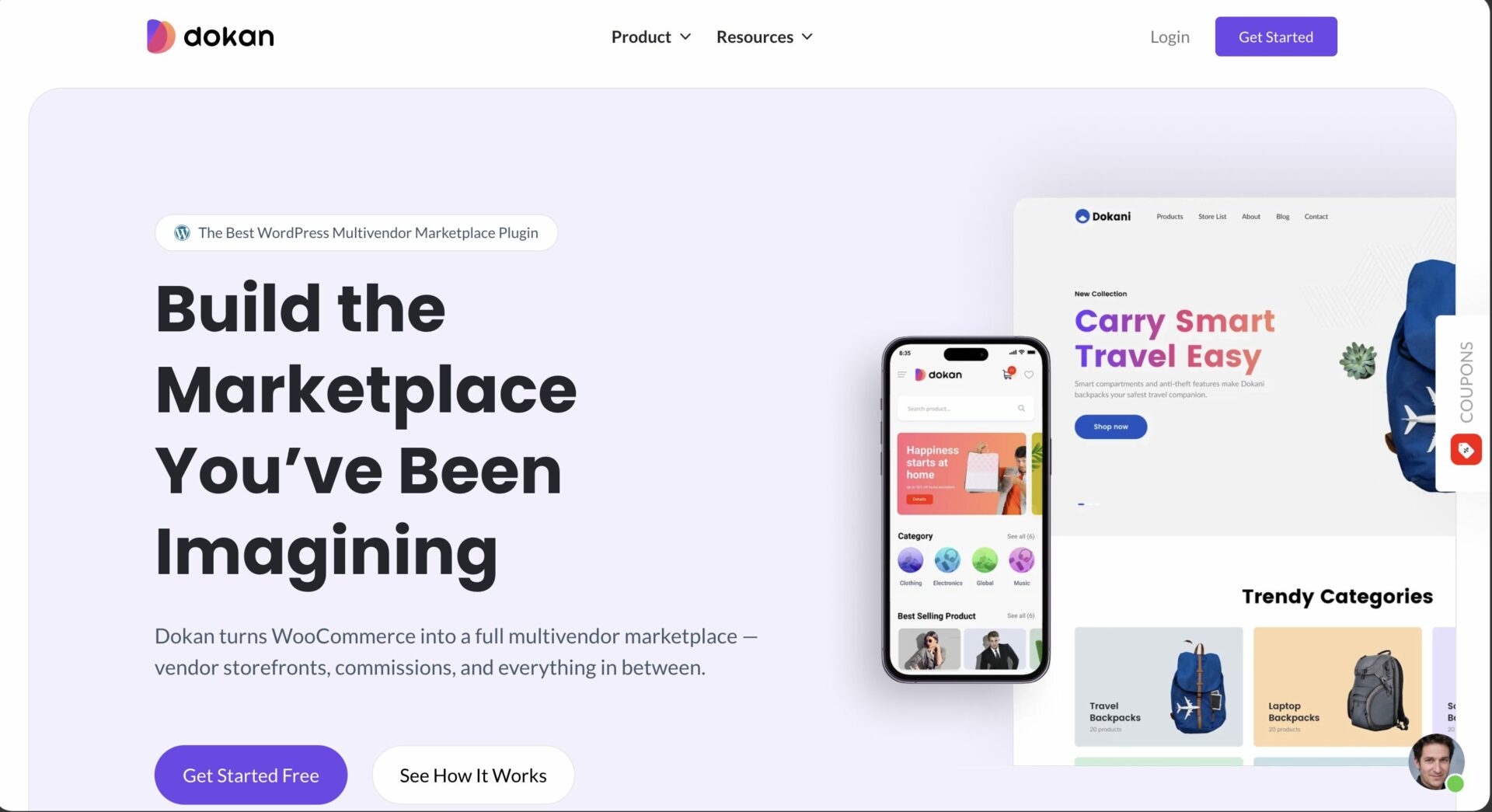
Dokan is a multivendor marketplace plugin built on WordPress and WooCommerce. According to its official WordPress.org listing, it now powers more than 40,000 live marketplaces worldwide and is maintained by weDevs, a company with 13 years in the WordPress ecosystem.
Its biggest strength is balance. Launching a marketplace takes minimal coding, and the frontend vendor dashboard is genuinely clean, letting sellers manage products, orders, and earnings easily. Owners keep central control over commissions, approvals, and payouts, too.
Because it sits on WooCommerce, Dokan inherits a vast ecosystem of themes, payment gateways, and integrations. With 40+ modules, you enable only the features you need, keeping the system lean early and expanding it as vendor numbers and catalogs steadily grow.
For most users, beginners and growing businesses especially, this mix of low entry cost, real ownership, and room to scale makes Dokan the most balanced option on this list. It is the closest thing here to a safe default choice that rarely turns into a regret later on.
Key Features of Dokan:
- Frontend vendor dashboard for easy store management
- Central admin control over commissions and payouts
- Works with WooCommerce ecosystem (themes + plugins)
- 40+ modules for advanced marketplace features
- Supports multiple payment gateways
- Scalable from small stores to large marketplaces
- Product, order, and shipping management for vendors

Explore this detailed post on the Dokan vs all the best multivendor marketplace platforms.
2. Magento — Enterprise-Level Power
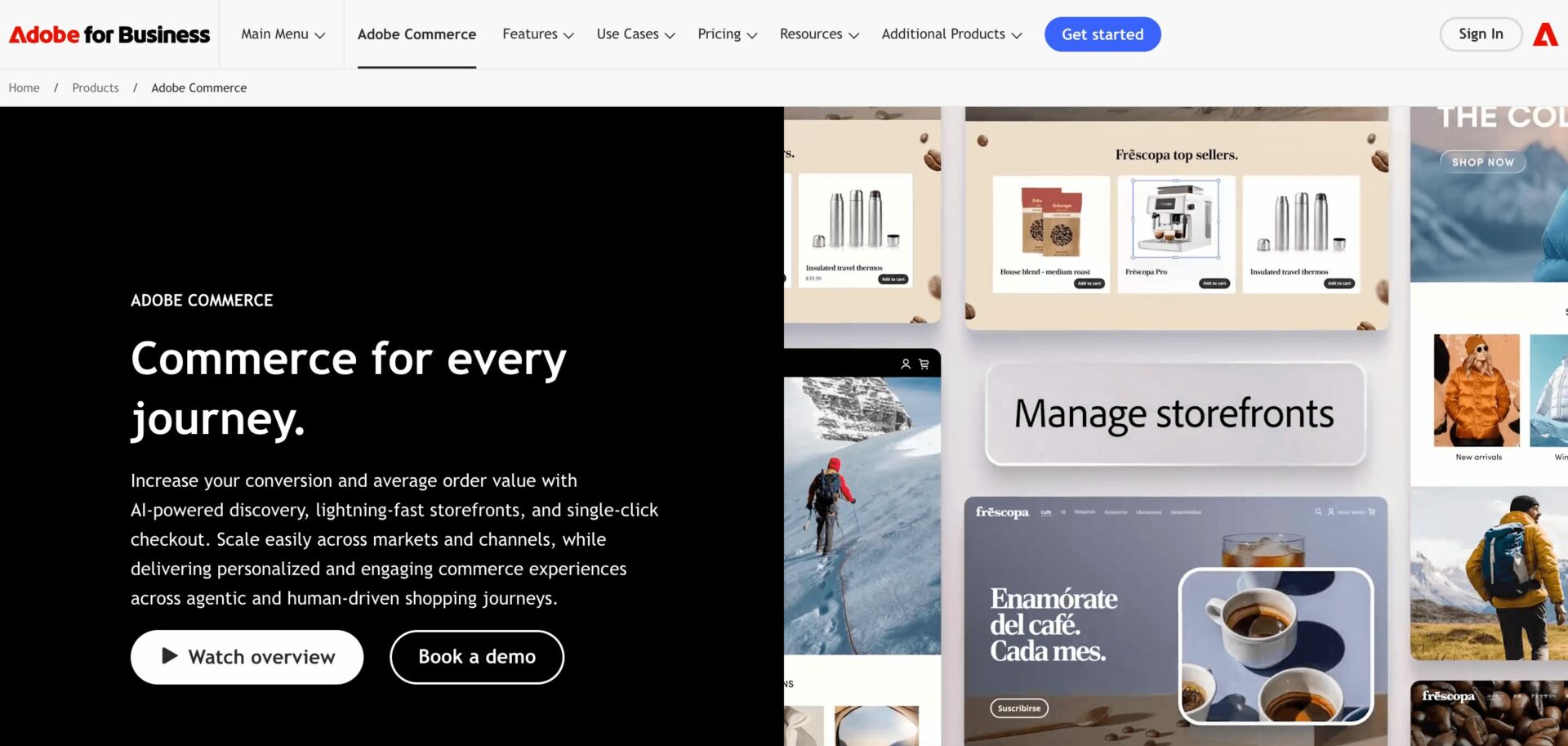
Magento, now part of Adobe Commerce, is built for scale. It handles enormous catalogs, complex pricing, and multi-store operations with ease, which is why large enterprises favor it. For high-volume marketplaces with serious technical resources, few rivals match it.
That power carries a price. Magento needs an experienced development team, and businesses can spend well over $15,000 a year on hosting, development, and maintenance. For smaller founders, the cost and complexity usually outweigh the enterprise-grade flexibility.
Key Features of Magento:
- Built for large-scale enterprise marketplaces
- Highly customizable architecture
- Multi-store and multi-language support
- Advanced product and pricing rules
- Strong scalability for high traffic
- Powerful backend admin system
Take a look at the battle – WooCommerce vs Magento.
3. Shopify + Apps — Fast SaaS Setup

Shopify is the fastest way to get selling. Its hosted model means no server management, quick onboarding, and a polished checkout experience. However, the multi-vendor functionality isn’t native to Shopify. You can add it through third-party apps, like Shipturtle and Webkul.
The trade-offs are control and cost. You work inside Shopify’s ecosystem rather than owning the stack, and monthly fees plus app subscriptions climb as you scale. It suits founders who value speed and simplicity over deep customization or full ownership of the platform.
Key Features of Shopify Marketplace Solution:
- Fully hosted SaaS platform
- Very fast setup and launch
- Secure and optimized checkout system
- App-based multi-vendor support
- Automatic hosting and updates
- Large app ecosystem
Confused whether to choose Shopify or not! Take a comprehensive look at the comparison between Shopify and Dokan.
4. FlyCommerce — Modern Headless Marketplace Solution
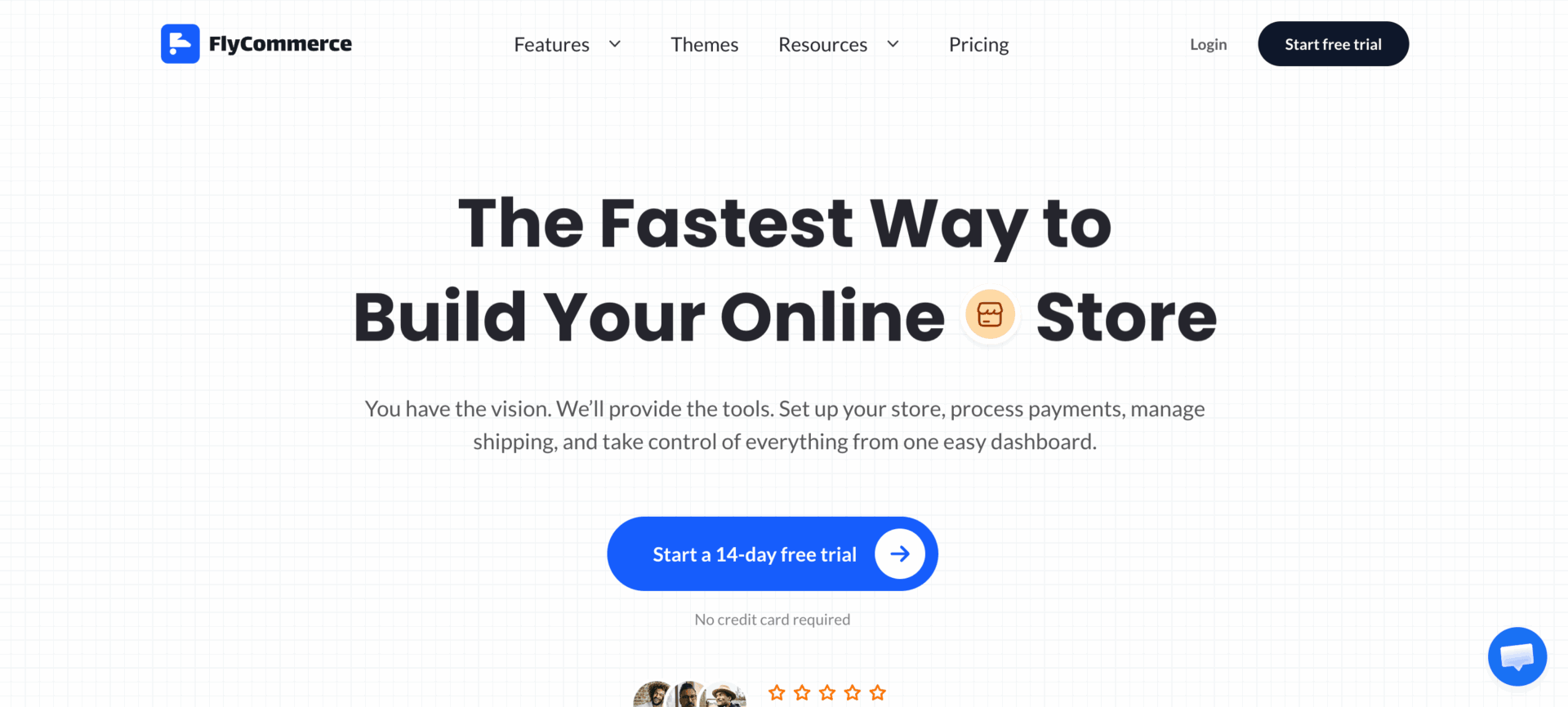
FlyCommerce is a modern headless marketplace platform. It follows an API-first approach, which means the backend is separated from the frontend. This allows businesses to build custom marketplace experiences using modern frameworks.
It uses frameworks like React or Next.js while keeping strong performance and flexibility. This platform is mainly designed for startups and technical teams that want to build highly customized marketplaces without the limits of traditional CMS-based systems.
Key Features of FlyCommerce:
- Headless, API-first architecture
- Full frontend and backend separation
- High customization flexibility
- Supports modern frameworks like React and Next.js
- Scalable and performance-focused design
- Developer-friendly ecosystem
- Suitable for custom-built marketplaces
5. Yo!Kart — Dedicated Marketplace Builder
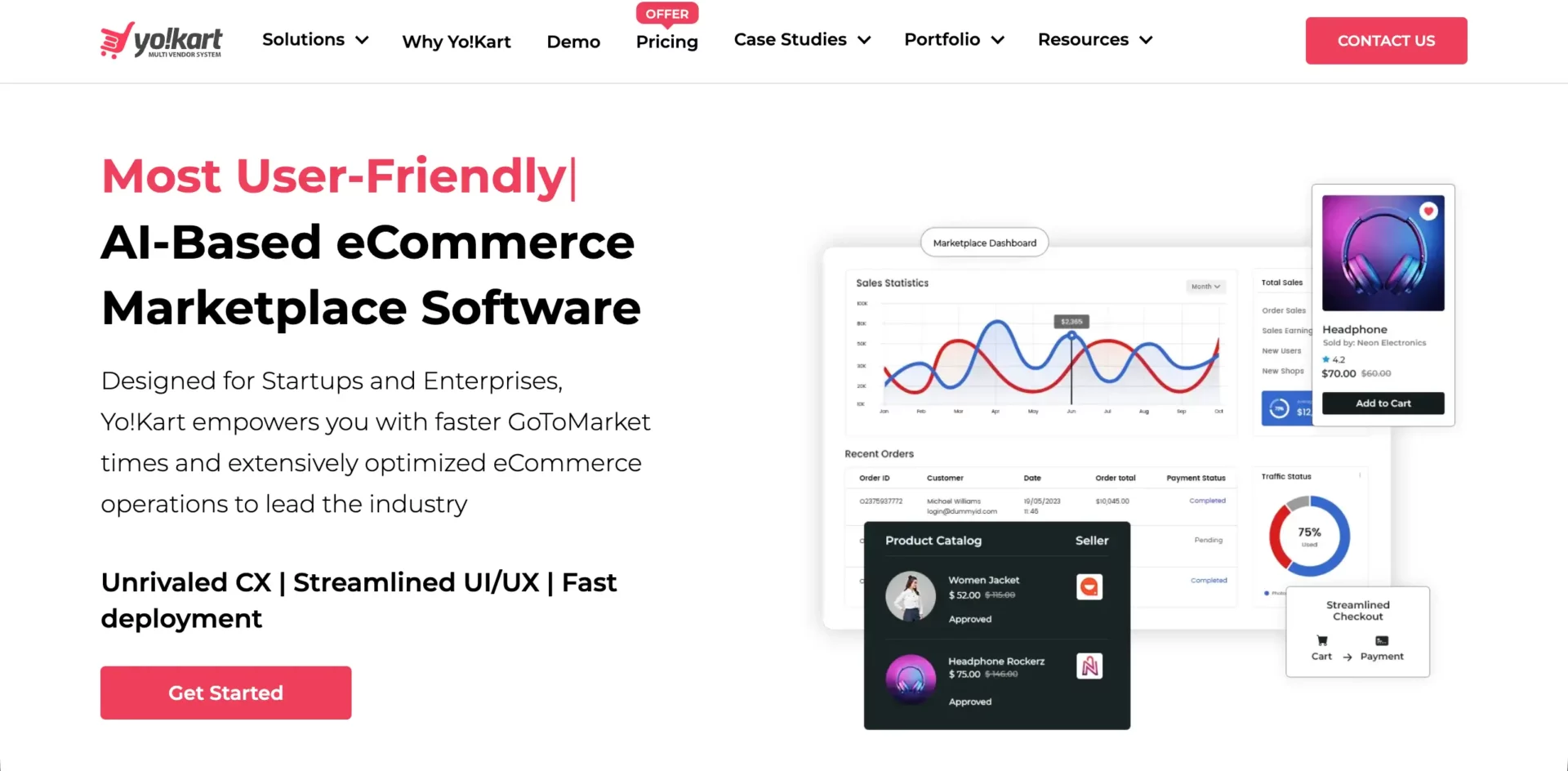
Yo!Kart is built specifically for marketplaces rather than adapted from a general store platform. It ships with marketplace-ready features out of the box and uses a one-time license model, which appeals to startups that prefer owning software over paying subscriptions.
The catch is setup effort. Getting a Yo!Kart marketplace, fully configured and customized, usually takes a meaningful time or some developer help. For founders with a clear plan and a little technical support, it remains a strong, marketplace-focused alternative to weigh.
Key Features of Yo!Kart:
- Built specifically for marketplaces
- One-time license pricing
- Multi-vendor management system
- Separate vendor and admin panels
- Mobile apps available
- Pre-built marketplace workflows
Learn why most marketplaces fail and how to avoid those mistakes.
6. Sharetribe — No Code Marketplace Option
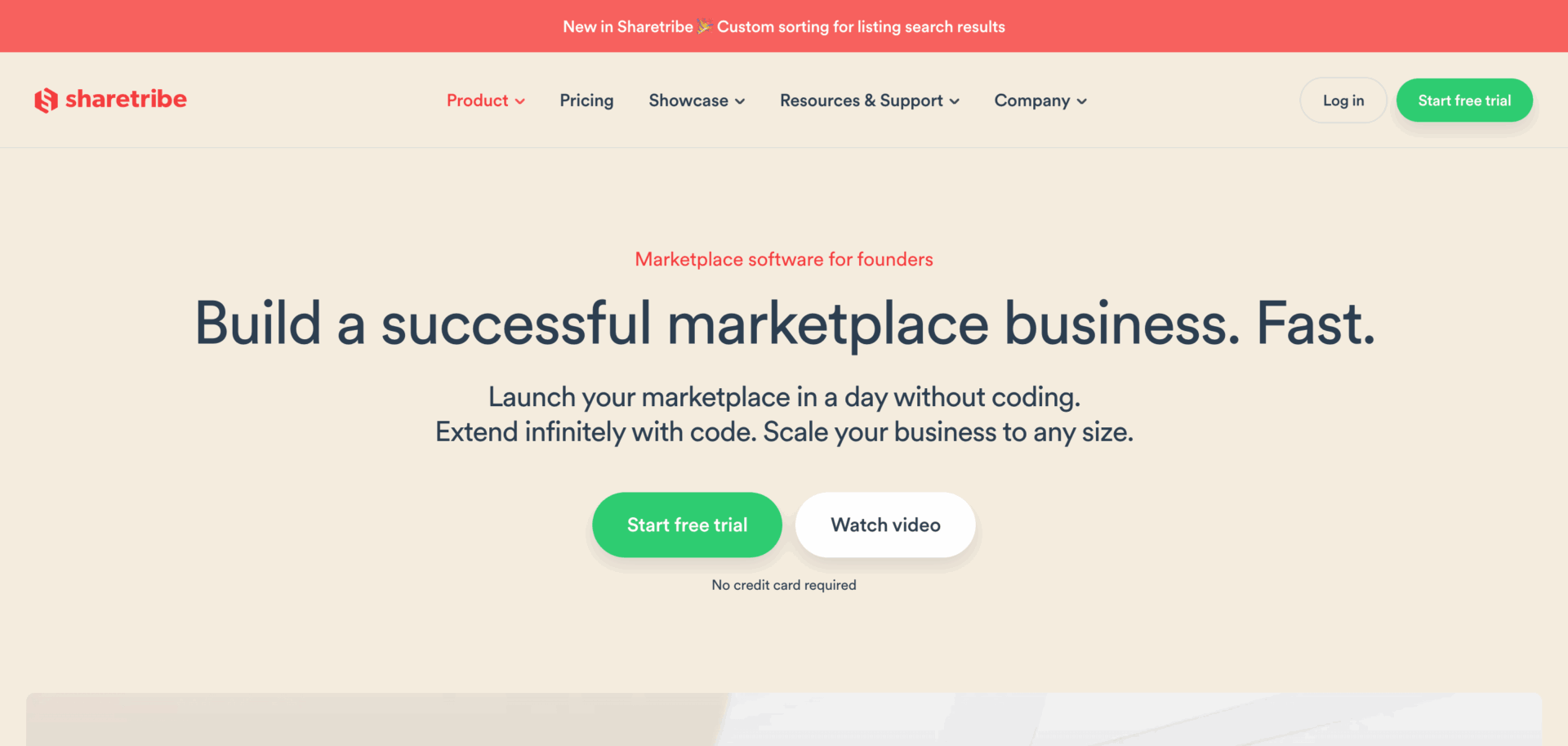
Sharetribe targets non-technical founders who want to test an idea quickly. Its hosted, no-code approach lets you launch a working marketplace MVP in days, which makes it popular for service and rental marketplaces where speed to validation beats deep customization.
That same simplicity caps your ceiling. Deep customization is limited unless you move to its developer platform, and ongoing subscription costs apply. Sharetribe is excellent for proving demand, but many founders eventually migrate once they outgrow its rigid framework.
Key Features of Sharetribe:
- No-code marketplace builder
- Fast MVP launch (days, not weeks)
- Hosted and fully managed platform
- Suitable for service and rental marketplaces
- Built-in payments and user management
- Developer API available for scaling
Explore the best tips on how to improve user experiences on marketplaces.
7. Arcadier — Cloud Marketplace Builder

Arcadier is a cloud-based builder supporting several marketplace types, from products to services and rentals. It offers templates, an API, and a developer marketplace for extensions, letting teams stand up a functional platform without managing the infrastructure.
Pricing is its main watch point. The tiered subscription model can become expensive as transaction volume and feature needs increase over time. For teams that value a managed cloud setup and can absorb scaling costs, Arcadier delivers a reasonably quick path to launch.
Key Features of Arcadier:
- Cloud-based marketplace builder
- Supports product, service, and rental models
- API and developer extension support
- Ready-made marketplace templates
- Managed hosting and infrastructure
- Multi-vendor system included
If you love self-hosting, here is a list of the best domain and hosting platforms for marketplaces.
8. OpenCart Multi-Vendor — Lightweight Setup
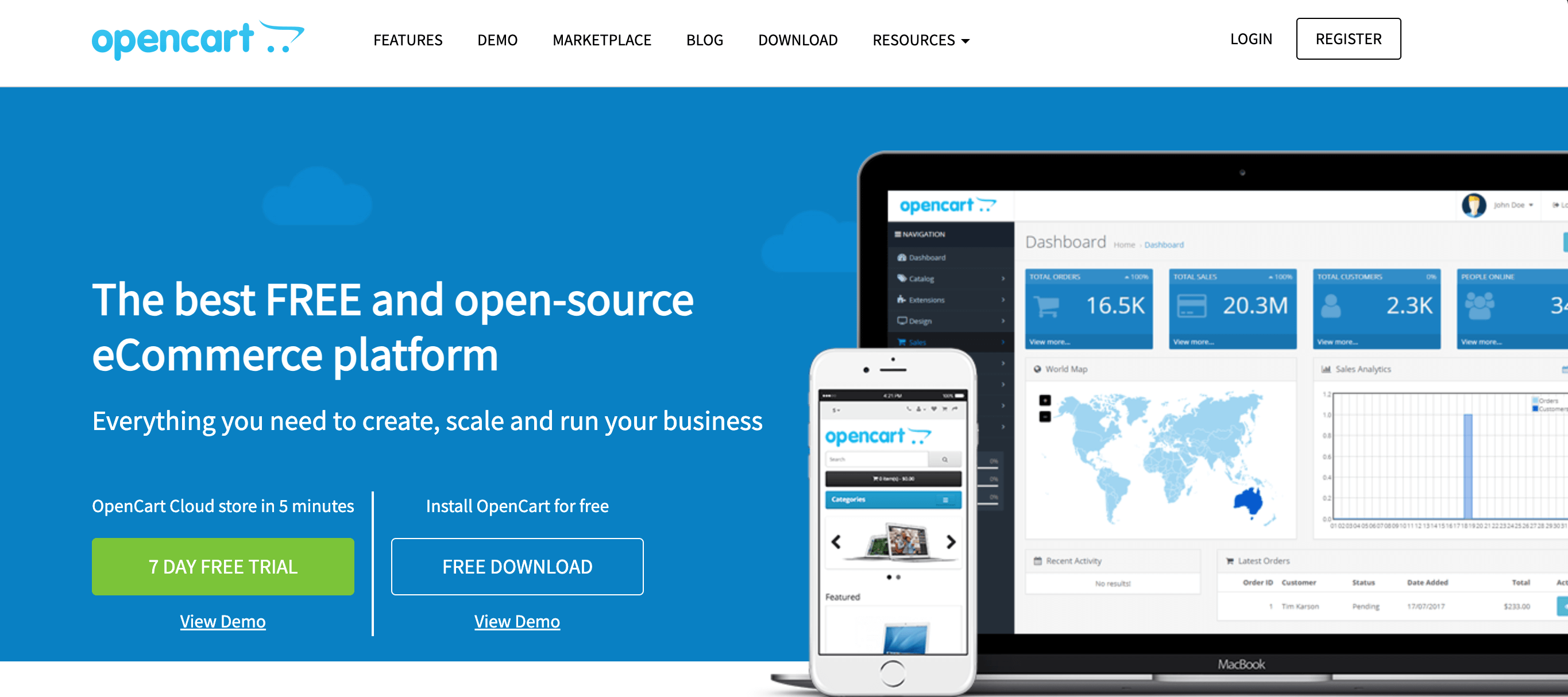
OpenCart is a lightweight, open-source store platform, and multivendor functionality is added through extensions. It appeals to owners who want a slim, low-overhead system and are comfortable handling some configuration and technical maintenance themselves over time.
Because marketplace features rely on third-party extensions, quality and support vary, and updates demand attention. OpenCart suits technically confident founders building smaller, focused stores, but it asks for more hands-on management than integrated solutions do.
Key Features of OpenCart Multi-Vendor:
- Lightweight open-source platform
- Extension-based multi-vendor setup
- Fast performance for small stores
- Flexible customization options
- Low hosting requirements
- Large extension marketplace
Here’s a thorough analysis of the differences between Dokan and CS-Cart multi-vendor.
9. PrestaShop Multi-Vendor — Modular System

PrestaShop is a modular open-source platform with a strong following in European e-commerce. Marketplace capability comes from dedicated modules, and its flexible structure lets developers tailor stores closely to the languages and tax rules common in EU markets.
That modularity is a double-edged sword. Functionality depends heavily on the quality and compatibility of the modules you choose, and conflicts can appear. With capable technical support, PrestaShop is a solid choice, especially for sellers focused on Europe.
Key Features of PrestaShop Multi-Vendor:
- Modular eCommerce system
- Strong EU market support
- Multi-language and multi-currency ready
- Marketplace via add-on modules
- Flexible store customization
- Large community support
Which One Should You Choose? A Quick Decision Guide
There is no universally best platform, only the best fit for your stage, budget, and skills. The short guide below maps common situations to the strongest options, so you can narrow ten choices down to one or two serious candidates in just a few seconds of reading.
- Growing Businesses → Dokan or a wider WooCommerce setup gives room to scale affordably.
- Enterprise operations → Magento (Adobe Commerce) suits large catalogs and big technical teams.
- No-code founders → Sharetribe or Arcadier let you launch fast without touching any code.
- Marketplace-first startups → Yo!Kart offers a dedicated, one-time-license marketplace foundation.
Notice that Dokan appears naturally in more than one category. That is not by design; it simply reflects how well a flexible, WordPress-based plugin adapts across beginner and growth stages, which is the main reason it suits such a wide range of owners and budgets.

Pros and Cons Snapshot of CS-Cart Alternatives
If you only have a minute, here is each platform distilled to its core trade-off. Use this snapshot to confirm a shortlist quickly, then revisit the detailed sections above before you commit. Each option below pairs a real strength with a limitation worth weighing.
| Platform | Pros (Biggest Advantages) | Cons (Main Limitations) |
|---|---|---|
| Dokan | Easy to launch, highly flexible, and scales well with the WordPress and WooCommerce ecosystem. | Advanced marketplace features may require premium modules. |
| Magento | Enterprise-grade performance, customization, and scalability. | Requires significant technical expertise and a substantial budget. |
| Shopify + Apps | Fastest way to launch a marketplace with minimal technical work. | Multi-vendor functionality relies on third-party apps, increasing long-term costs. |
| FlyCommerce | Modern headless architecture with complete flexibility for custom marketplace experiences. | Requires development expertise and is less suitable for non-technical users. |
| Yo!Kart | Built specifically for marketplaces with a one-time license model. | Setup, customization, and maintenance can require technical assistance. |
| Sharetribe | Excellent for launching and validating a marketplace idea quickly without coding. | Customization options become limited as business requirements grow. |
| Arcadier | Fully managed cloud solution with support for multiple marketplace models. | Subscription costs can increase as your marketplace expands. |
| OpenCart Multi-Vendor | Lightweight, open-source, and relatively inexpensive to run. | Marketplace functionality depends heavily on third-party extensions. |
| PrestaShop Multi-Vendor | Flexible modular architecture and strong support for European commerce. | Stability and features depend on the quality of installed modules. |
Want to Migrate from CS-Cart Multi-Vendor? What to Expect?
Moving away from CS-Cart Multi-Vendor may sound like a major project. But if you are careful and keep several considerations in your mind from the very beginning, the entire process will gradually seem to be easier.

a. Products, Vendors, and Customers
This is the core of your migration. Products, vendor accounts, and customer data are usually exported first. Products may include variations, images, and custom attributes that need cleanup before import. Vendor and customer records must also be checked for missing fields, as not all platforms support the same data structure.
b. Orders and Transaction History
Order data is important for both reporting and vendor payout tracking. While most systems allow basic order import, detailed transaction history may not transfer perfectly. You may need to keep CS-Cart as an archive for old reports or financial records.
c. SEO URLs
SEO structure is one of the most sensitive parts of migration. CS-Cart URLs are different from WooCommerce, Shopify, or other systems. Without proper 301 redirects, you risk losing rankings and organic traffic. A full URL mapping plan is required before launch.
d. Payment, Shipping, and Tax Rules
Marketplace rules do not move automatically. Payment gateways, shipping logic, vendor commissions, and tax settings must be recreated in the new system. This step often requires manual configuration because each platform handles marketplace logic differently.
e. Remove Unnecessary Products and Data
Before migration, it is important to clean your store. Remove outdated products, inactive vendors, duplicate listings, and test data. A clean database reduces migration errors, speeds up import, and improves performance on the new platform.
This guide could be helpful if you want to migrate from any CMS to WordPress.
Why Dokan Could Be the Best Alternative
A clear theme runs through this comparison: Dokan becomes most practical when you build a marketplace on WordPress. The reason is clear. WordPress powers more than 40% of all websites and around 60% of the CMS market, according to W3Techs, making it a stable and battle-tested foundation.
WooCommerce, the e-commerce layer most WordPress marketplaces use, sits at the center of this. StoreLeads tracks over 7 million live WooCommerce stores, and the plugin’s average market share sits near 33% of e-commerce sites, evidence of a deep, reliable ecosystem.
This is exactly where Dokan fits in. It adds complete multi-vendor functionality on top of WooCommerce, giving you vendor dashboards, commission control, and marketplace tools while still keeping the flexibility and ownership of WordPress.
FAQ on Top Alternatives to CS-Cart Multi-Vendor

Let’s now take a look at the answers to some of the most frequently asked questions commonly found online related to today’s topic.
Final Verdict
Every platform in this list has its own strength. Magento fits large enterprise-level marketplaces, Sharetribe and Arcadier are strong for quick no-code launches, Yo!Kart works well for dedicated marketplace builders.
Still, for most users who want a balance of simplicity, control, and long-term flexibility, WordPress-based solutions stand out. Among them, Dokan offers the most complete experience for building a multi-vendor marketplace without high setup barriers.
In the end, the right choice depends on your goals. But if you want a practical starting point that can grow with your business, Dokan remains one of the most reliable and future-friendly options.
If you have enough time, you can read this real marketplace success story with Dokan – a user shared with use.
Subscribe to
Dokan blog
We send weekly newsletters, no spam for sure!




Leave a Reply